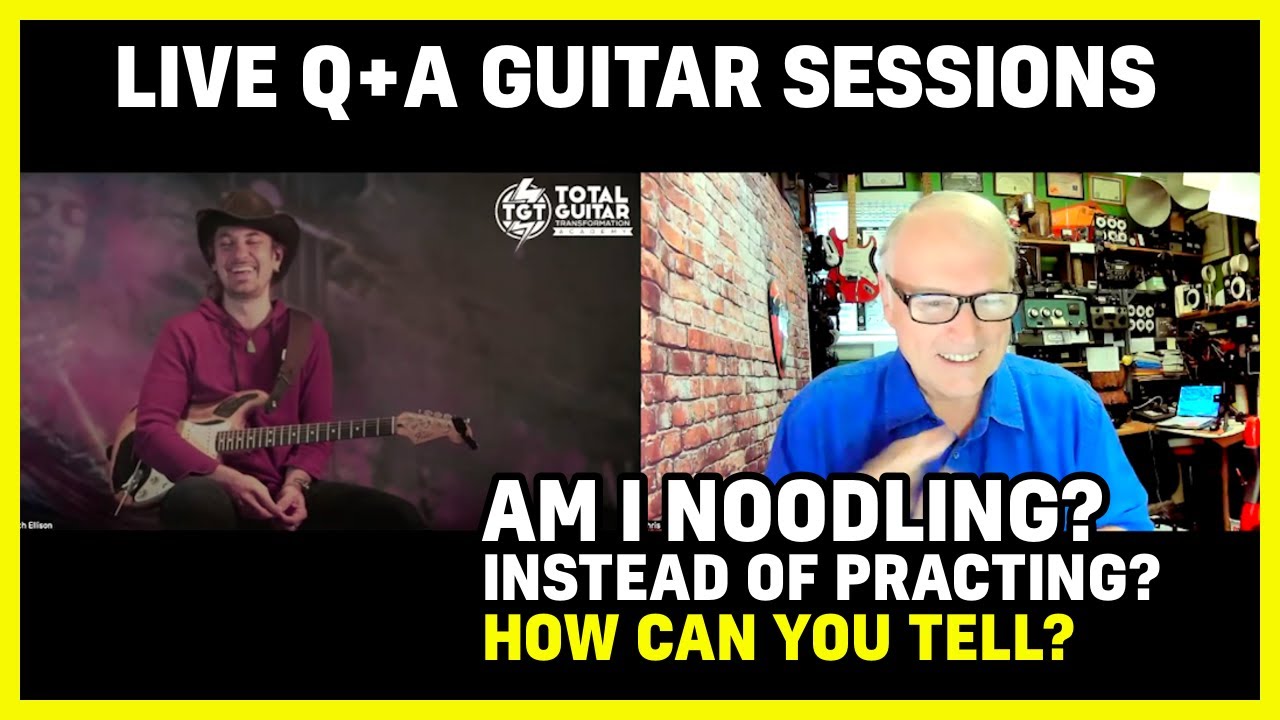
Are you wasting practice time with mindless noodling?
Are You Wasting Practice Time with Mindless Noodling?
As a guitarist, have you ever found yourself mindlessly plucking away at your guitar, unsure if what you're doing is actually productive? If so, you're not alone. Many guitarists wonder whether they’re truly practicing or just "noodling" — and if noodling is a complete waste of time. In this article, we’ll break down what noodling really means, how to avoid falling into its pitfalls, and how to make your practice sessions intentional and effective.
What Is Noodling, and Is It Always a Waste of Time?
Noodling is often described as playing your guitar without a clear purpose or direction. It’s the kind of playing where your hands seem to move on autopilot, repeating the same licks and patterns you’ve done a thousand times before, while your mind is disconnected. According to Ulrich Ellison, noodling can be likened to "the captain being asleep at the wheel." In other words, your fingers are driving the bus, but your brain has checked out.
That said, noodling isn’t inherently bad. It’s the intentionality behind your playing that determines whether you're wasting time or making progress. There’s a huge difference between aimlessly jamming for hours and deliberately exploring your fretboard with a specific goal in mind. Let’s dive into how you can make your guitar practice sessions more intentional and avoid the trap of unproductive noodling.
How to Turn Noodling Into Productive Practice
The key to transforming mindless noodling into productive practice lies in your approach. Here are a few tips to help you make your playing time more effective:
- Set a clear intention: Before you start playing, ask yourself what you want to accomplish. Are you working on nailing a specific lick, improving your phrasing, or targeting certain notes like thirds or sevenths? Always have a goal in mind.
- Stay present: Mindless playing happens when you go on autopilot. To avoid this, stay fully engaged with what you’re doing. Pay attention to your tone, timing, and technique.
- Practice with purpose: If you're jamming over a backing track, don't just rely on your go-to licks. Challenge yourself to explore new scales, experiment with dynamics, or focus on integrating a lick into your musical vocabulary.
A great way to check if you're noodling or practicing with intent is to imagine someone tapping you on the shoulder and asking, "What are you working on right now?" If you can’t answer that question, it’s time to refocus your efforts.
Examples of Intentional Practice
Let’s say you're playing over a backing track. Instead of aimlessly jamming, you could decide to work on one of the following:
- Expanding your vocabulary: Focus on learning and incorporating a new lick or phrase into your playing. Repeat it until it feels natural, then experiment with applying it in different musical contexts.
- Improving your phrasing: Try practicing soft, understated licks like those in Stevie Ray Vaughan’s "Tin Pan Alley." Pay attention to your dynamics and articulation, ensuring every note is intentional.
- Targeting specific notes: For example, aim to emphasize the thirds in your solos. This not only improves your fretboard knowledge but also makes your playing sound more melodic and connected to the chord progression.
By focusing on these types of exercises, you’ll not only avoid wasting time but also see noticeable improvement in your playing. Remember, the key is to have a clear target and stay disciplined in your practice.
At the end of the day, the question isn’t whether noodling is good or bad — it’s about the intention behind it. When you play with purpose, even something that looks like noodling to an outside observer can be a powerful learning tool.
The Bottom Line
Noodling doesn’t have to be a waste of time. By setting clear goals, staying mindful, and challenging yourself, you can turn every moment with your guitar into an opportunity for growth. Whether you’re working on a specific technique, expanding your vocabulary, or refining your phrasing, the key is to play with intention. So next time you pick up your guitar, ask yourself: What am I working on right now?
Ready to finally break through your plateau? Apply for a free strategy session and let’s map out your path to guitar freedom.