Get more Soul Into Your Guitar Solos!
Get More Soul Into Your Guitar Solos: The Henri Cordal Style Guide
If you've ever listened to a guitarist and thought, "How do they make that sound so soulful?"—you're not alone. Many guitarists struggle with the same issue: they know the theory, they have the vocabulary, but their playing still feels stiff and mechanical. The secret to breaking through this barrier lies in understanding how to blend blues, R&B, and soul music influences into your soloing technique.
In this comprehensive guide, we'll explore how legendary guitarist Ulrich Ellison discovered his signature sound through years of playing live music on Austin's famous Sixth Street, and how you can apply these same principles to transform your own playing.
Learning Soul Through Live Performance: The Sixth Street Story
Sometimes the best guitar lessons don't come from textbooks—they come from jumping into the deep end. For Ulrich Ellison, that moment came during his time in Austin, Texas, around 2007-2009. While pursuing his degree in jazz performance at the University of Austin, Ellison worked as a hired gun on Sixth Street, Austin's legendary entertainment district, often playing six nights a week.
Sixth Street is a unique musical environment where 20-30 bands perform simultaneously, each club packed with talented musicians playing everything from blues standards to soul and R&B. This immersive musical landscape forced Ellison to expand his vocabulary quickly. Before moving to Texas, he admitted that his playing felt stiff despite having solid theoretical knowledge and good ears. The difference came from exposure and necessity.
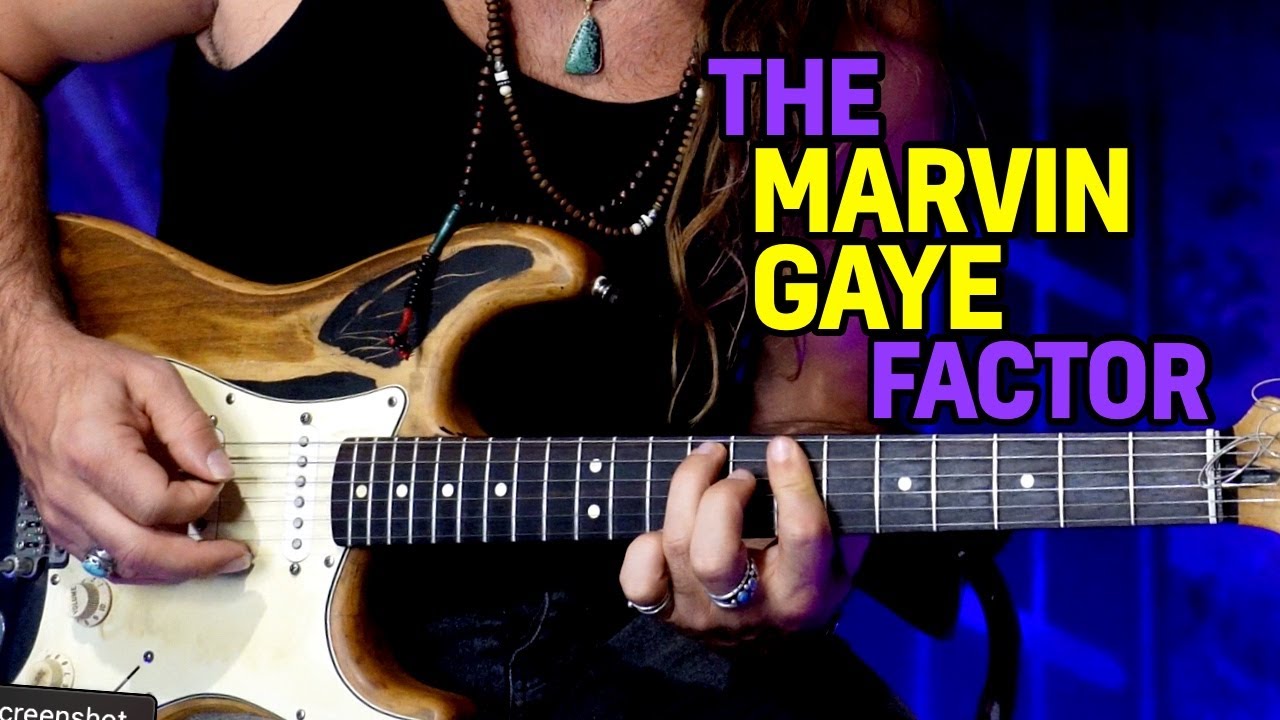
Playing alongside established musicians like Tish Lancaster, who introduced him to the music of Marvin Gaye, transformed Ellison's approach to soloing. Listening to soul legends and adapting their phrasing techniques into his own playing became the turning point. This real-world experience taught him what no classroom could: how to infuse genuine soul and emotion into every note.
Essential Licks and Phrasing: Building Your Soul Vocabulary
Playing with soul isn't about random note selection—it's about learning specific vocabulary and phrasing techniques that create emotional impact. Just as a speaker uses particular words and phrases to convey meaning, guitarists use specific licks and bends to communicate feeling.
One of the most important concepts Ellison discovered is using the minor third in a major context. This technique, which wouldn't naturally occur to many guitarists trained solely in traditional scales, creates that distinctive soul and R&B flavor. When layered over major chord progressions, this approach adds complexity and emotion that listeners immediately recognize.
Another essential technique is understanding Henri Cordal-style licks with connecting intervals—particularly the use of sixths and harmonization in thirds. These aren't random embellishments; they're deliberate phrasing choices that top soul and R&B guitarists have used for decades.
The key takeaway: soul playing requires building a personal library of licks, bends, and phrasing patterns. Start by listening to artists like Marvin Gaye and studying how their guitarists bend notes, hold them, and transition between phrases. Then practice these licks over backing tracks until they become second nature.
Mastering Keys and Relative Minor-Major Relationships
Here's where many guitarists hit a ceiling: they can play these soulful licks in one key, but freeze up when the bandleader calls a different tune. The solution is understanding your relative major and minor keys.
If you're playing in E-flat major, you're simultaneously in C minor pentatonic. When the progression shifts to A major, you need to instantly know you're now working with F-sharp minor. This isn't about being a music theory genius—it's about developing immediate, reflexive knowledge of your fretboard.
Practice this by taking each soulful lick you've learned and transposing it through all 12 keys. Use a looper pedal to record chord progressions, then improvise over them, deliberately changing keys. This builds the muscle memory and mental reflexes you need to play authentically soulful music in any musical situation.
The best part? Once these relationships become automatic, your improvisations will flow naturally. You'll stop thinking about "what key am I in?" and start focusing on phrasing, dynamics, and emotion—the things that actually make soul music resonate with listeners.
Ready to finally break through your plateau and master the soulful playing techniques that separate good guitarists from great ones? Apply for a free strategy session and let's map out your personalized path to guitar freedom. Whether you're struggling with emotional expression in your solos or want to master the Henri Cordal style, Ulrich Ellison can help you break through to the next level of your playing.