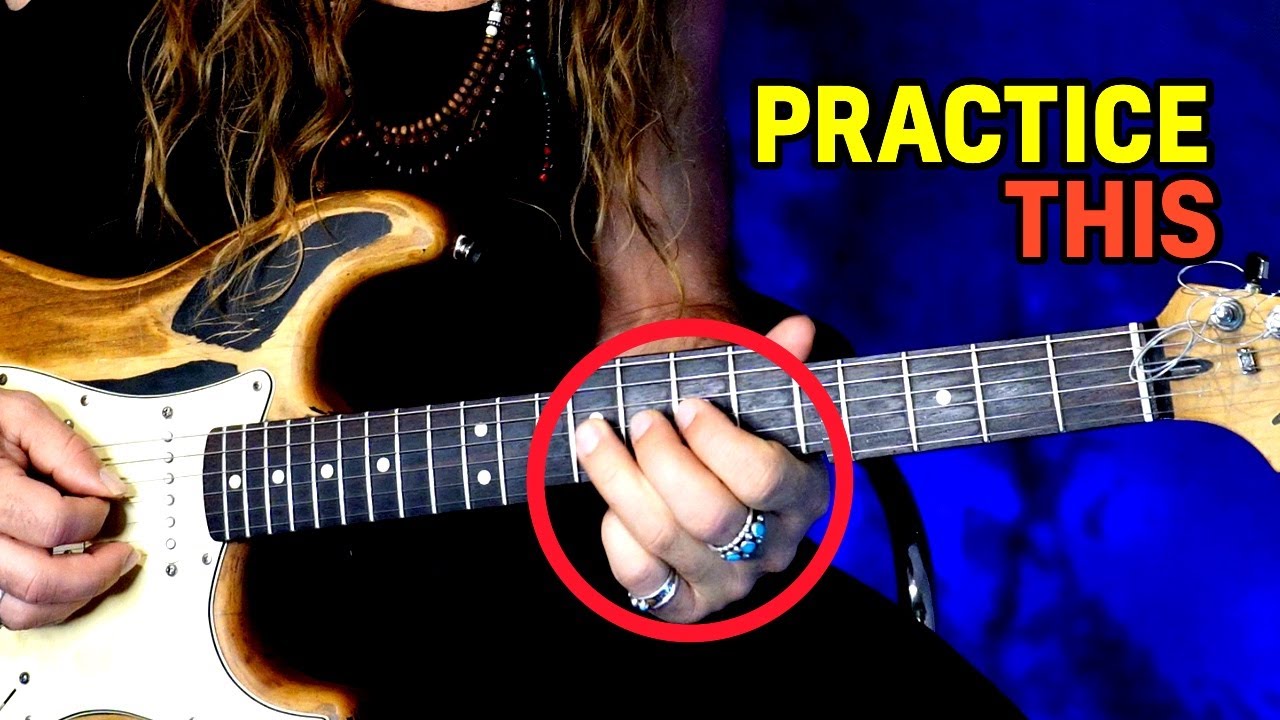
How To Practice Improvisation The Right Way - Pt. 1 Lock In Your Foundations
How to Practice Improvisation the Right Way: Lock In Your Foundations
If you've ever felt stuck in your guitar journey—like you've hit a wall after the beginner phase and can't seem to make progress no matter how hard you try—you're not alone. Many guitarists who love blues and rock find themselves in this frustrating position. They want to improvise with confidence, jam with friends, maybe play a gig or two, but something just isn't clicking. The good news? There's a proven path forward, and it starts with understanding that improvisation mastery isn't about complicated techniques or shortcuts. It's about building a rock-solid foundation.
Why Your Foundation Matters More Than You Think
Building a house without a solid foundation is impossible—the same principle applies to your guitar playing. When you strengthen your foundational skills, you're essentially programming muscle memory and freeing up mental bandwidth for the creative aspects of playing. Think of it this way: once certain fundamental techniques become automatic, your brain can focus on what really matters—making music and expressing yourself through your instrument.
The key foundational pillars you need to develop are rhythm and time, pitch awareness (especially string bending), and harmonic knowledge. This includes understanding chord shapes, triads, and fretboard orientation. These might sound tedious or boring compared to shredding solos, but they're the unglamorous groundwork that separates casual players from confident improvisers.
The challenge is that most guitarists have never been taught to work on these areas systematically. You might have learned some basics early on, but then what? Without a clear framework for continued development, it's easy to plateau. The breakthrough comes when you understand what to practice and why.
Master the Rhythmical Pyramid: Your First Exercise
If you only had time to work on one rhythm exercise, it should be the rhythmical pyramid. This exercise encompasses all the main subdivisions of rhythm and how they relate to each other. The goal is to play smoothly through whole notes, half notes, triplets, quarter notes, eighth notes, sixteenth notes, and their triplet variations—all on a single note.
Here's what makes this effective: you're training your internal clock to understand how different rhythmic subdivisions fit together. A whole note gets one note per bar. A half note gives you two notes per bar. Half note triplets give you three notes per bar. The pattern continues through increasingly faster subdivisions. When you can visualize and execute these divisions evenly, you've developed a crucial skill that will show up in every aspect of your playing.
One critical aspect of this exercise is the ability to switch between subdivisions immediately. You don't want to take an entire bar to lock into a new rhythm—you want instant transitions. This is especially important when switching from binary subdivisions (like eighth notes) to triplet-based ones (like eighth note triplets). The rhythmic feel shifts dramatically, almost like you're playing in a different time signature.
A practical tip: start by clapping these patterns before you ever pick up your guitar. Clapping lets you focus purely on the mental visualization and muscle memory without worrying about guitar technique. If you find yourself struggling with this exercise, that's actually valuable information. It means you've discovered a gap in your musical foundation—and now you can address it directly.
Why Feedback Changes Everything
Here's something crucial that often gets overlooked: everyone approaches these exercises differently, and without proper feedback, you might be reinforcing bad habits instead of building skills. This is why working with a coach or mentor who can observe your playing and correct your technique in real-time makes such a dramatic difference.
When you're practicing alone, it's easy to convince yourself you're doing things right when you're actually developing compensatory patterns or imprecision. Having someone experienced watch your playing—someone who's performed thousands of shows and coached hundreds of students—can illuminate issues you never even knew existed. That's the real value of structured guitar coaching programs: the personalized feedback loop that accelerates your progress exponentially.
These foundational exercises might seem simple, but they're the bedrock upon which all improvisation skill is built. Master them, and you'll unlock the freedom and confidence to improvise with genuine musicality and control.
Ready to finally break through your plateau and develop the improvisation skills you've always wanted? Apply for a free strategy session and let's map out your path to guitar freedom.