How To Practice Improvisation The Right Way - Pt. 3 Jam And Grow
How To Practice Improvisation The Right Way: Jam And Grow (Part 3)
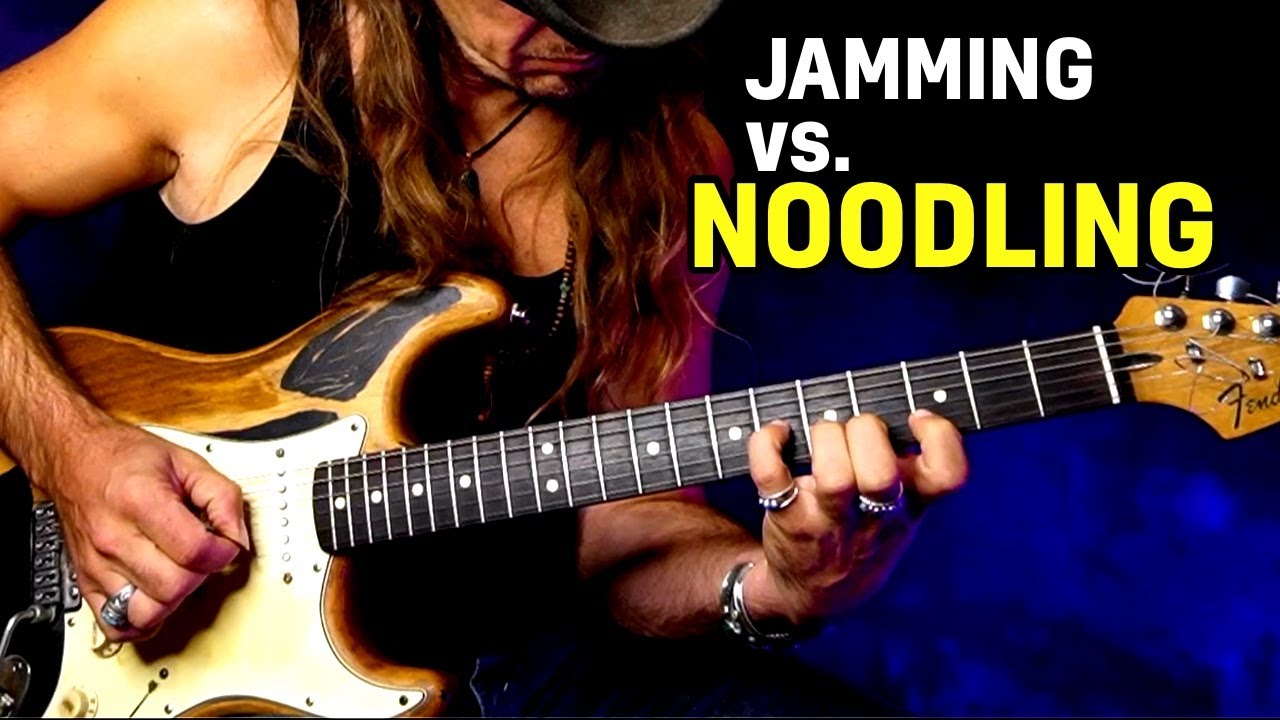
If you're like most guitarists, you've probably spent hours noodling over backing tracks, thinking you're practicing improvisation. But here's the uncomfortable truth: mindless jamming isn't practice at all. It's just playing. And if you want to actually improve your improvisation skills, you need to understand the difference between jamming for fun and jamming with purpose.
In this third installment of our improvisation practice series, we're diving into the concept of intentional jamming—a practice method that transforms your jam sessions from aimless noodling into focused, deliberate improvement. Whether you're struggling with timing, phrasing, or confidence in your lead playing, this approach will fundamentally change how you practice.
The Problem With Mindless Noodling
Let's be honest: most guitarists jam without any real intention. You fire up a backing track, play over it for thirty minutes, and call it practice. But practicing without focus is like working out without a plan—you might feel like you're doing something, but you're not making real progress.
The issue is that when you noodle without purpose, you tend to repeat the same patterns, habits, and mistakes over and over. Your brain isn't learning anything new. You're not addressing your weaknesses. You're not strengthening your strengths. You're just spinning your wheels, and deep down, you know it.
Intentional jamming changes this equation entirely. By bringing a specific focus to every jamming session, you transform practice from passive repetition into active skill development. You might focus on your phrasing, your timing, your use of octaves, or specific improvisational devices you want to master. Whatever your focus is, you have it clearly in mind before you even hit play.
The Power Of Loop Stations: Creating Your Own Musical Context
One of the most effective tools for intentional jamming is a looper pedal or loop station. If you've never used one seriously for practice, you're missing out on a game-changing technique.
A looper gives you complete control over your musical context. Unlike backing tracks that lock you into predetermined tempos, keys, and feels, a looper lets you create your own grooves. You can experiment with different rhythmic feels, explore various tempos, and craft the exact musical environment you need to practice what you want to practice.
Here's the genius part: when you're playing with a looper, you're constantly confronted with your own timing. There's nowhere to hide. If your rhythm is sloppy, you'll hear it immediately. If your phrasing is off, you can't blame the backing track. This instant feedback pushes you to tighten up your playing and develop real musicality.
Start with a simple progression—like a 1-6-4-5 progression in E-flat major, for example. Build a groovy rhythm loop first, focusing on feel rather than complexity. Then add melodic phrases on top. The goal isn't to sound impressive; it's to sit solidly in the groove and develop confidence with your phrasing.
Building Your Practice Focus: From Foundations To Advanced Concepts
The real secret to jam-and-grow practice is having a crystal-clear intention before you start. What are you actually working on? Are you drilling the one-string approach to build note-finding skills? Are you exploring how to play a specific scale in different keys? Are you experimenting with rhythm variations? Are you working on bending accuracy or phrasing precision?
Whatever your focus is, make it explicit. Say it out loud. Write it down. Keep it at the front of your mind while you're jamming.
A practical approach is to start inside your comfort zone, establishing solid foundations with the basics. Once you feel confident, lean out into unfamiliar territory. Try different feels. Experiment with more complex phrasing. Take chances. This is where real growth happens—when you're comfortable enough to explore but challenged enough to learn.
The looper becomes your perfect training partner in this process. You can dial in different rhythmic feels and tempos instantly. Want to practice in a swung, bluesy feel? Create a loop for it. Want to try a more reggae-influenced approach? Build that loop. This flexibility lets you explore how your playing translates across different musical contexts.
The bottom line: intentional jamming with clear focus and a looper as your tool transforms what used to be mindless practice into powerful skill development. You'll build confidence, strengthen your weaknesses, and develop the musicality that separates average players from truly expressive guitarists.
Ready to finally break through your plateau and develop the focused practice habits that actually work? Apply for a free strategy session and let's map out your path to becoming a confident and expressive lead guitarist.