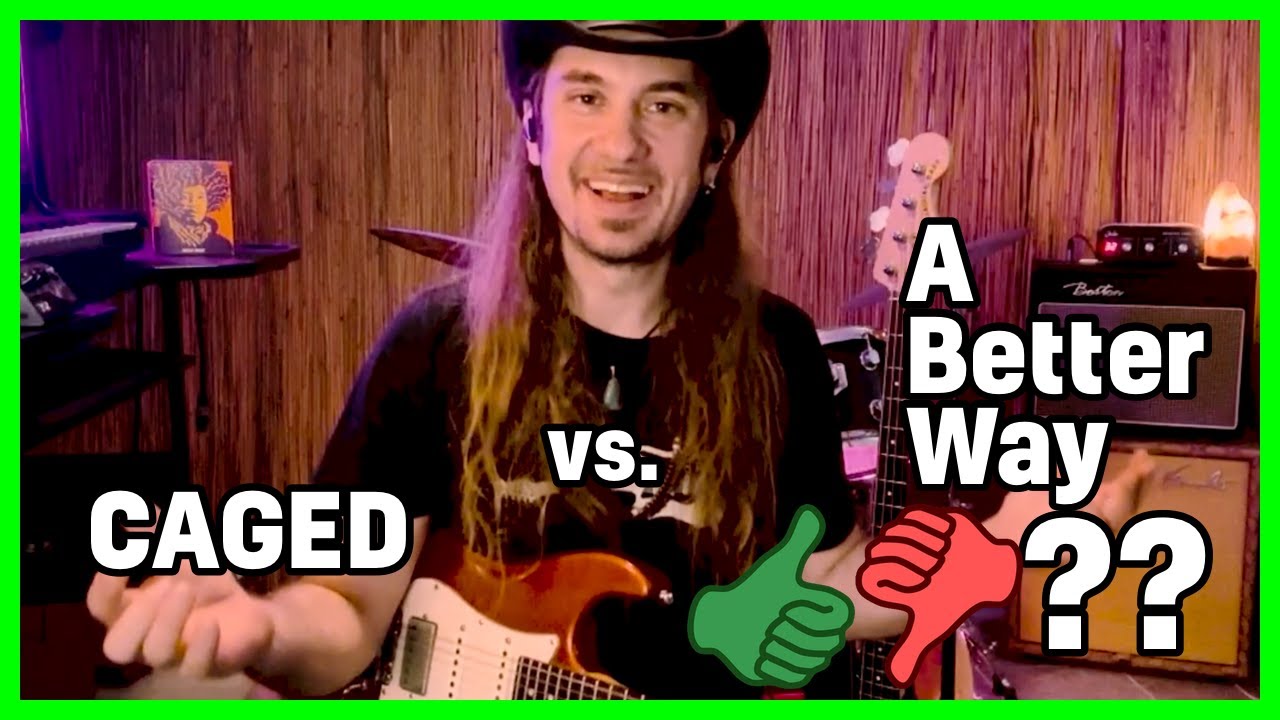
Is there a better way to memorize the fretboard than CAGED? (it's not triads)
Is There a Better Way to Memorize the Fretboard Than CAGED?
The CAGED system is a popular method for learning the guitar fretboard, but is it the best approach for creating music? In this post, I’ll share why I personally never studied CAGED and how a more musical, phrase-based approach can transform the way you play—and think—on the guitar. Whether you're an adult guitarist looking to break free from patterns or simply want to unlock the fretboard more fluently, this method might just be the game-changer you need.
Why the CAGED System Might Be Holding You Back
First, let’s address what the CAGED system is. It maps the five open chord shapes—C, A, G, E, and D—across the fretboard. While this can help beginners understand the guitar neck, the problem lies in its limitations. Instead of thinking musically, players often get stuck visualizing rigid patterns that lack real-world application.
For example, if you play the CAGED “C shape” in different positions, you’re essentially just moving a skeleton of notes. Without adding phrasing or musicality, it doesn’t sound like music—it’s just a collection of notes. Many guitarists who rely heavily on CAGED find themselves plateauing, unable to break out of these static patterns.
Instead of thinking in terms of CAGED shapes, why not think in terms of actual musical phrases? Let’s dive into how you can use phrases to unlock the fretboard in a much more organic and intuitive way.
Visualizing the Fretboard Through Musical Phrases
Here’s a better way to approach the fretboard: start with a simple musical phrase, then learn to play that phrase in multiple positions across the neck. This method forces you to think musically from the start, while also helping you master the fretboard layout.
For example, let’s take a classic phrase inspired by Jimi Hendrix. Start with a C drone to establish the tonal center and play the phrase in one position. Now, move that same phrase to different areas of the fretboard. Each position will have subtle tonal differences due to the guitar’s unique setup, giving you a deeper understanding of its sound possibilities.
Not only are you learning the fretboard this way, but you’re also training your ear, improving your tone, and building fluency. By focusing on phrases instead of patterns, you’re already playing music—even while practicing!
Unlocking the Guitar’s Full Potential
One of the challenges of the guitar is its complexity. Unlike a piano, where each note has only one location, the guitar allows you to play the same note in multiple places. This can be overwhelming, but it’s also what makes the guitar so versatile.
By using the phrase-based approach, you’ll naturally navigate these complexities. For example, take a simple lick in A minor and play it across the fretboard. Try it in higher positions, lower positions, and with different string combinations. You’ll notice how each variation has its own tonal character, even though the notes remain the same.
This exercise isn’t just about fretboard orientation—it’s also about tone and touch. The more you explore, the more options you’ll have when it comes to expressing yourself musically. And isn’t that what playing guitar is all about?
Why Famous Guitarists Don’t Think in CAGED
Think about your favorite guitarists. Do you really believe they’re visualizing CAGED shapes when they improvise or create music? The truth is, most professional players think in terms of melody, phrasing, and musical intention—not static patterns.
The CAGED system can be a helpful tool for beginners, but it’s important not to let it become a crutch. If your goal is to play fluently across the neck, focus on musical phrases instead. This approach ensures that everything you practice has immediate musical application, eliminating the disconnect that often comes with pattern-based methods.
Ready to try it for yourself? Pick a simple phrase or lick and start exploring it across the fretboard. You’ll be amazed at how quickly your understanding of the guitar—and your overall playing—improves.
And don’t worry, we’ll talk about triads in another post!
Curious to learn more about this approach? Ready to finally break through your plateau? Apply for a free strategy session and let's map out your path to guitar freedom.