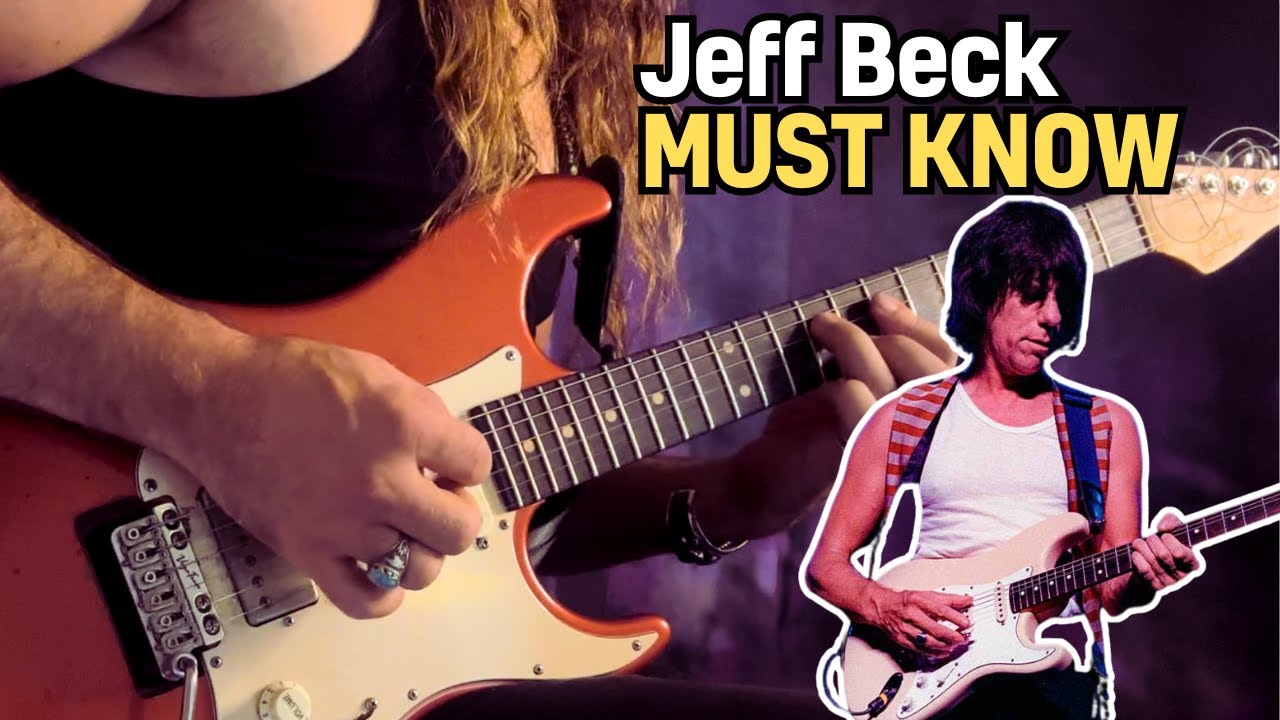
Learn THIS Mystery Pentatonic and sound like Jeff Beck!
Learn This Mystery Pentatonic and Sound Like Jeff Beck
What if you could unlock a completely new scale sound that adds a fusion edge to your blues playing without sounding too jazzy? In today’s lesson, we’re diving into the “Yan Hama Scale,” a hybrid pentatonic sound inspired by the legendary Jeff Beck. This scale is not a standard pentatonic or arpeggio—it’s somewhere in between—and it can transform your improvisation into something truly unique and melodic.
What Is the Yan Hama Scale and Why Should You Use It?
The Yan Hama Scale is a five-note scale that provides a fresh alternative to the typical pentatonic scales most guitarists rely on. Its unique intervals give it a melodic and slightly exotic sound, blending elements of Western and Eastern music. Originating from Jeff Beck’s collaboration with keyboardist Jan Hammer during their work on the song "Star Cycle," this scale is rooted in a D major triad but incorporates a flat 7 and a fourth for extra spice.
Here’s what makes it stand out:
- It starts with a major third interval, creating a bold opening leap.
- It adds a half-step fourth, introducing tension.
- The flat 7 gives it a bluesy edge without sounding like a traditional blues scale.
- The intervals create space, avoiding the typical “up and down” scale sound.
When you play the Yan Hama Scale, it feels more like an arpeggio that’s been enhanced with extra color tones. This makes your lines stand out, giving your solos a melodic and adventurous quality.
How to Play the Yan Hama Scale Across the Fretboard
To get started with the Yan Hama Scale, it’s helpful to organize it into two-string patterns. This method allows for easy memorization and helps you cover the entire fretboard. Here’s an example in the key of G:
On the low E and A strings:
- Start on the G root note (3rd fret, low E string).
- Play the major third (7th fret, low E string).
- Move to the fourth (5th fret, A string).
- Hit the fifth (7th fret, A string).
- End with the flat 7 (10th fret, A string).
Repeat this pattern across the D and G strings, then the B and high E strings, shifting the shape up an octave each time. This diagonal approach ensures fluid movement and helps you break free from “boxed-in” pentatonic patterns.
Once you’re comfortable with the scale shapes, experiment by playing the scale on a single string to really internalize the intervallic relationships. Focus on phrasing and dynamics to make the most of its melodic potential.
Combining the Yan Hama Scale with Blues Pentatonics
The real magic happens when you mix the Yan Hama Scale with your regular blues pentatonic. This combination creates a unique fusion sound that’s both melodic and bluesy. For example, if you’re jamming in a Mixolydian context, you can alternate between the Yan Hama Scale and the minor pentatonic scale to create tension and resolution in your solos.
Here’s how to try it out:
- Set up a Mixolydian backing track in your preferred key.
- Start with a minor blues pentatonic lick to establish a familiar blues sound.
- Transition into the Yan Hama Scale to introduce melodic leaps and spice.
- Blend the two seamlessly, using bends and slides to connect the phrases.
This approach keeps your solos fresh and dynamic, avoiding the monotony of sticking to a single scale. The Yan Hama Scale’s arpeggio-like structure contrasts beautifully with the blues pentatonic, adding depth and complexity to your improvisation.
Ready to Elevate Your Guitar Playing?
The Yan Hama Scale is just one example of how you can break out of the ordinary and explore new sounds on the guitar. By integrating it into your playing, you’ll gain access to a melodic, fusion-inspired edge that will help you stand out. Whether you’re a Jeff Beck fan or just looking for fresh ideas, this scale is a game-changer.
Ready to finally break through your plateau? Apply for a free strategy session and let's map out your path to guitar freedom.