Recognizing Chords For Improvisation: Non-Diatonic Progressions
Recognizing Chords for Improvisation: Non-Diatonic Progressions
Have you ever been jamming over a backing track, feeling completely in the zone, only to hit a wall when an unexpected chord appears out of nowhere? It’s not part of the key, and suddenly, your confidence takes a hit. You’re not alone—this happens to countless guitarists, even in popular songs and backing tracks. These seemingly out-of-place chords, often called non-diatonic chords, are a common feature in music. But how do you navigate them without losing your flow?
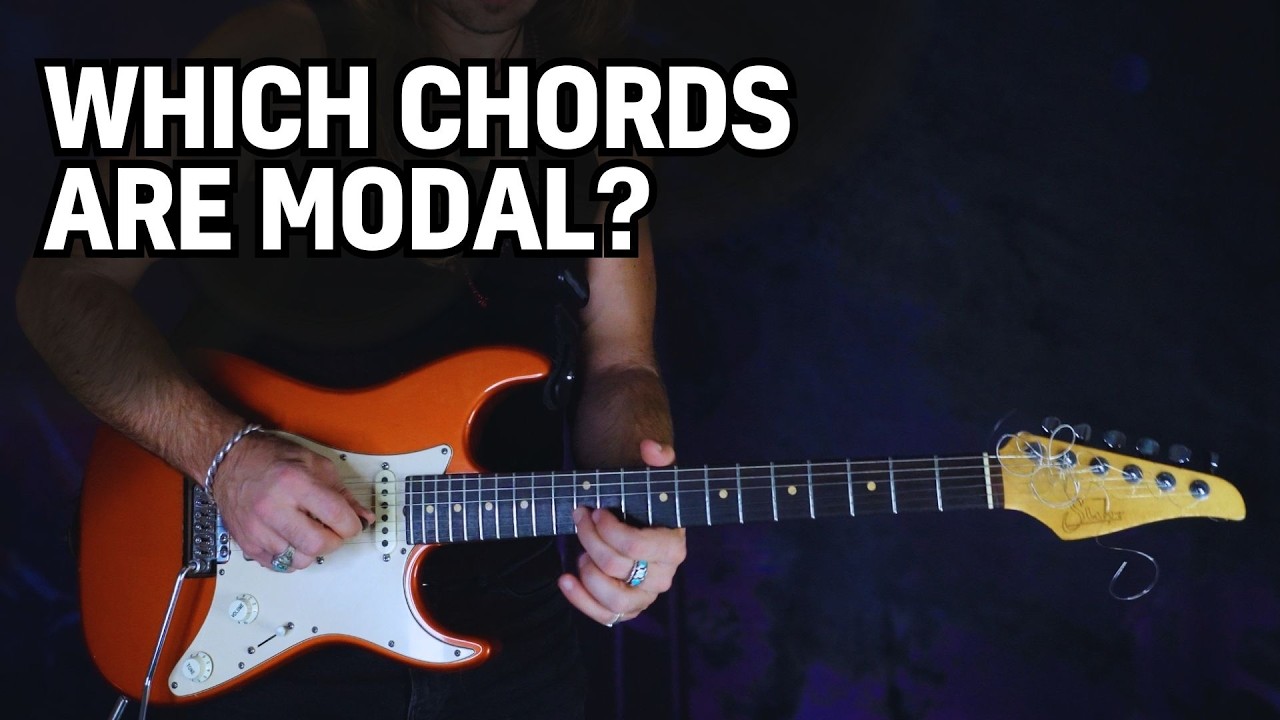
In this blog post, we’ll explore how to recognize and play over these tricky non-diatonic progressions, empowering you to improvise with confidence. The video below features a hands-on demonstration using a backing track in B minor, where I break down the steps to identifying and mastering these chord shifts.
Step 1: Understand the Chord Progression
The first step to mastering non-diatonic progressions is understanding the chords themselves. In the example backing track, we start in B minor, cycling between a B minor chord (the I chord) and an E7 chord (the IV chord). This is a classic two-chord vamp—simple but effective. You may recognize it from the Pink Floyd song “Breathe” or other iconic tracks. It’s a great foundation for improvisation, so get comfortable playing over it.
However, the progression doesn’t stay there. It introduces a G major 7 chord, which shifts the tonal mood. This G major 7 plays the role of the flat 6 chord (♭VI) in B minor, introducing a more romantic, melancholic quality to the progression. This subtle change happens through what’s called a modal interchange, where the music briefly borrows chords from a related key or mode.
Step 2: Recognize the Mood and the Mode
One of the keys to improvising confidently is recognizing the mood created by these shifts. The initial progression (B minor to E7) is in the Dorian mode, characterized by its slightly brighter, sassy edge. The introduction of the G major 7 chord, however, moves us toward the Aeolian mode, also known as the natural minor scale. This shift creates a softer, more introspective feel.
Even if you’re not a music theory expert, your ears can guide you. Listen for the difference in mood: Dorian feels jazzy and uplifting, while Aeolian feels emotional and introspective. Training your ear to recognize these shifts will make it easier to adapt your playing in real-time.
Step 3: Practical Tips for Improvising Over Non-Diatonic Chords
Now that you understand the chord progression and the mood shifts, it’s time to put it into practice:
- Lean on the pentatonic scale: If you’re unsure how to handle the modal shift, the B minor pentatonic scale is your safety net. It works because it doesn’t include the notes (G♯ or G) that define the modal difference. This allows you to play confidently without clashing.
- Target key notes: To elevate your improvisation, focus on the notes unique to each mode. For example, emphasize the G♯ note during the Dorian section and the G note when the progression shifts to Aeolian. This will make your solos sound intentional and connected to the chords.
- Use your ears: Even if you don’t know all the theory, you can develop your ability to hear and respond to these changes. Practice with backing tracks like the one featured here and experiment with different melodic ideas.
By following these steps, you can start to break free from playing the same patterns over and over. Recognizing non-diatonic progressions gives you the freedom to explore new melodic territories and add depth to your improvisations.
Remember, the ultimate goal is to play with more intuition and confidence. You don’t need a master’s degree in music theory to sound great—just a willingness to practice and listen deeply.
Ready to Transform Your Guitar Playing?
Non-diatonic progressions don’t have to be intimidating. With the right tools and mindset, you can navigate them like a pro and unlock a whole new level of musical creativity.
Ready to finally break through your plateau? Apply for a free strategy session and let's map out your path to guitar freedom.