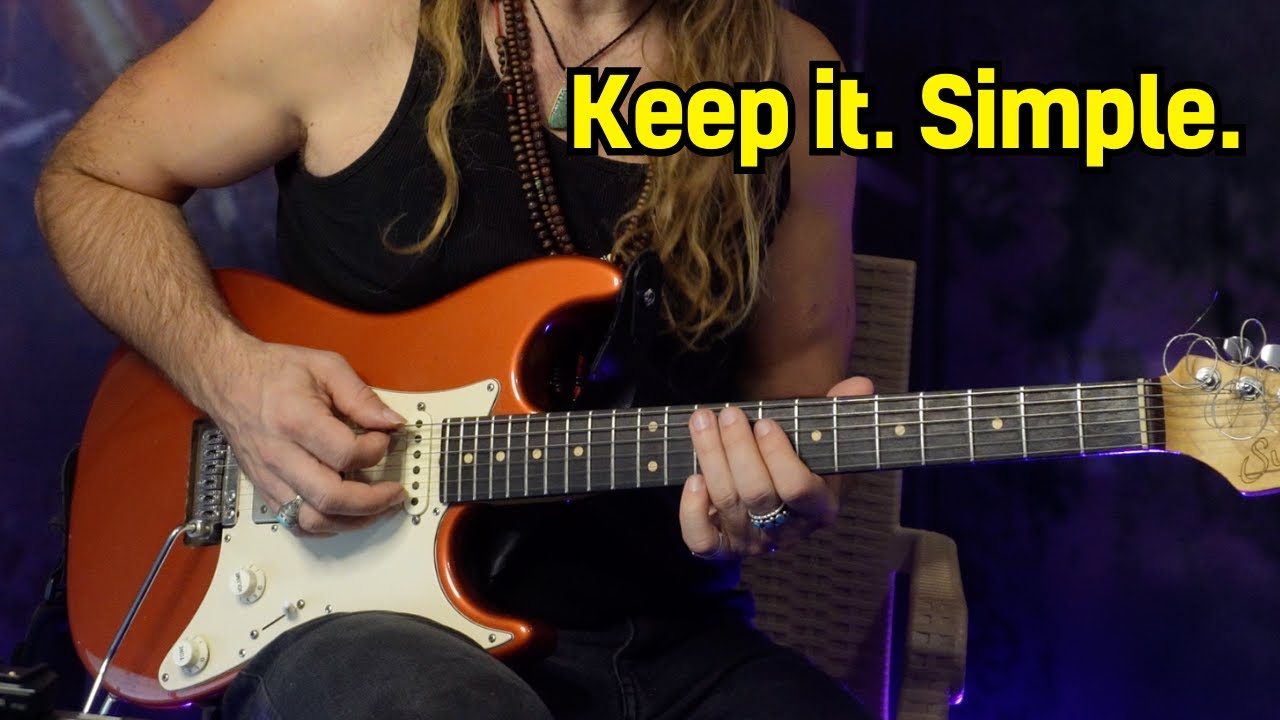
Rediscover Simplicity In Your Guitar Solos
Rediscover Simplicity in Your Guitar Solos
As guitarists, we've all been there: that urge to overplay, to stuff every solo with as many notes as possible, leaving little room for breath or musicality. But what if the secret to truly soulful, memorable solos lies in doing less? If you're ready to declutter your playing and rediscover the art of simplicity, you're in the right place. In this post, I'll share three actionable strategies to transform your solos into melodic, confident masterpieces.
1. Embrace the Power of Space
One of the most common pitfalls for intermediate guitarists is playing endless streams of notes with no pauses. While it might feel impressive in the moment, it often overwhelms the listener and dilutes the emotional impact of your solo. The first step to more melodic playing is to embrace space.
Here's a simple exercise to get started: play a short phrase, then pause and count to three before playing the next one. For example, you could play a strong signature phrase, let it breathe, and then come back with your next idea. This deliberate use of space adds clarity and anticipation to your playing, making every note count.
Like a great speech, your solos should have moments of silence that allow your audience to process and feel the emotion behind your notes. Give it a try, and you'll notice your solos becoming more intentional and impactful.
2. Use Repetition to Build Musical Themes
Repetition is a powerful tool in music, yet many guitarists overlook it. Instead of aimlessly noodling, focus on creating and developing motifs within your solos. A motif is a short, memorable musical idea that serves as the foundation of your solo.
For instance, you can play a simple melody, repeat it, and then slightly vary it. This could mean playing the same lick an octave higher or modifying a note or two. Think of your solo as a conversation—each statement should relate to the last, forming a cohesive musical narrative.
Here's a structure to try: play a motif (A), repeat it with a slight variation (A'), and then finish with a contrasting phrase (B). This A-A'-B form keeps your solo engaging while giving it a sense of direction. By using repetition effectively, you'll create solos that stick in your listener's mind long after the song ends.
3. Pay Attention to Phrase Endings
The way you end a phrase is just as important as how you begin it. A well-crafted phrase ending can make your solo sound polished and professional, while a sloppy or abrupt ending can leave it feeling incomplete. One technique to improve your phrase endings is what I call the "trail-off." Instead of abruptly stopping a note or phrase, let it slide off or fade naturally. This creates a sense of resolution and musicality.
For example, instead of cutting a note short, try adding a gentle slide or vibrato to let the note sing. This small adjustment can make a huge difference in how your solos feel. Additionally, the space after the phrase ending is crucial. It builds anticipation and sets the stage for your next idea, giving your solos a conversational, authoritative quality.
Practice paying close attention to your phrasing, especially the endings. Even simple lines can sound beautiful and intentional when you focus on these subtle details.
Simplicity doesn't mean playing less—it means playing smarter. By embracing space, repetition, and thoughtful phrasing, you'll unlock a whole new level of expression in your guitar solos. Remember, the goal isn't to impress with speed or complexity; it's to connect with your listeners through music that speaks to the soul.
Ready to finally break through your plateau? Apply for a free strategy session and let's map out your path to guitar freedom.