SKYROCKET Your Lead Guitar Playing In Under 7 Minutes
SKYROCKET Your Lead Guitar Playing In Under 7 Minutes
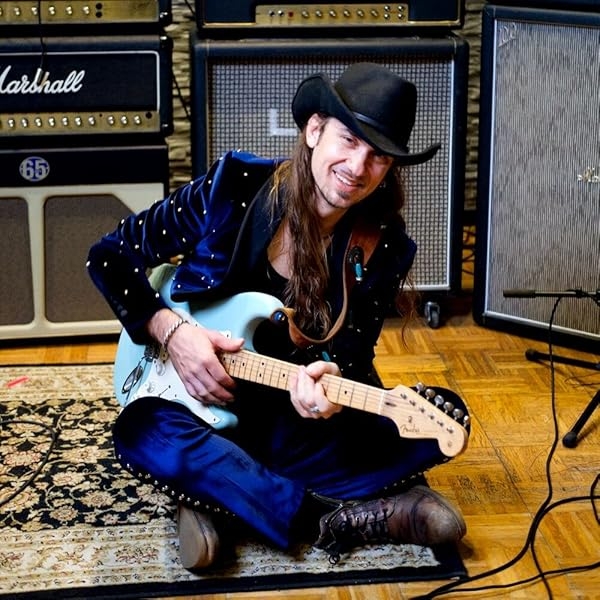
What if you only had five minutes with a guitar coach to learn the most transformative techniques that would genuinely accelerate your lead playing? That's the premise behind this game-changing lesson from Total Guitar Transformation Academy. Instead of overwhelming you with complex theory or shredding techniques, Ulrich Ellison breaks down the three essential exercises that separate average players from those who truly command the fretboard.
Whether you've been playing for six months or six years, you've likely hit a plateau. You can play the notes, but something feels off. Your solos lack personality. Your technique feels mechanical. The good news? These three fundamental areas—bending control, rhythmic placement, and articulation—are the keys to unlocking expressive, professional-sounding lead guitar playing.
Master Bending and Phrasing Control
Let's be honest: fancy finger work and lightning-fast note sequences sound impressive for about two seconds before they become meaningless noise. What actually separates professional guitarists from amateurs is pitch control—particularly in bending technique.
Most aspiring lead guitarists rush through their bends, landing somewhere in the general vicinity of the target note. That's not good enough. To develop true mastery, you need to lock in on your target note with precision. Here's the practical approach Ulrich recommends:
Set up a drone running in the background—this is crucial. A drone gives you a fixed reference point, transforming practice into target practice. Play a note and bend it slowly toward your target pitch. Don't rush. Feel the fretboard under your fingers as you gradually increase pressure and adjust your bending finger's angle. Once you hit the target note perfectly, hold it there. Match it exactly with the drone.
Repeat this exercise across different strings and with different intervals—half-steps, whole steps, and eventually larger bends. This deliberate practice builds muscle memory and develops your ear simultaneously. When you finally step into a real jam session or recording session, your bends will be pristine, giving your phrases the credibility and professionalism that commands respect.
Bending control isn't flashy, but it's absolutely foundational. Master this first, and everything else becomes easier.
Revolutionize Your Rhythm and Phrase Placement
Here's a surprising insight from Ulrich's work with hundreds of students: the most common rhythmic mistake improvisers make when they're starting out is that every phrase begins on beat one. Every. Single. One.
Think about what this creates. Your bandmates are anchoring on beat one. Your drummer is emphasizing beat one. Your bass player is grounding the harmony on beat one. If your solo phrases all start there too, you're creating rhythmic clutter and overcrowding the most important beat in the measure. Your solo becomes tangled with the band's foundation instead of weaving around it.
The fix is elegant: consciously start your phrases on beat two, three, or the "and" of beats. When you intentionally avoid beat one, something magical happens. Your phrasing naturally becomes more flowing, more conversational. You create space. You build tension and release. Your solos suddenly have breathing room and sophistication.
Work with this exercise using eighth-note phrases first. Build comfort with starting on beat two. Once that feels natural, expand to other starting points. Eventually, add sixteenth notes and experiment with different ending points too. This single adjustment—shifting where your phrases begin—will dramatically improve your overall musicality and make you sound like someone who actually understands music theory, not just someone who memorizes scales.
Breathe Life Into Your Playing With Touch and Articulation
The difference between a competent guitarist and a captivating one often comes down to one thing: dynamics and articulation. These are the peaks and valleys that make music interesting.
Touch refers to your ability to play notes with varying volume—softer notes, louder notes, and strategic accents placed throughout your phrases. Articulation is your ability to play notes short versus long, clipped versus sustained, crisp versus smooth.
Compare two versions of the same phrase: one played with uniform volume and length, one played with intentional accents, dynamics, and varied note lengths. The second version sounds alive. It sounds expressive. It sounds like music.
This is the goal all guitarists should pursue: playing with voice-like expression. Think about how you naturally speak. You vary your volume. You emphasize certain words. You pause for effect. You speed up and slow down. Your intonation rises and falls. That's what separates a monotonous speaker from a captivating one. The same principle applies to guitar.
Even with just two or three notes, you can create interesting rhythmical figures by mixing in accents and articulation variations. This is the opposite of the scale-running, note-dumping approach many players default to. Instead, you're playing with intention and musicality.
Work on these three fundamental areas—bending control, rhythmic placement, and articulation—and you'll notice an immediate transformation in how your lead playing sounds and feels. You'll develop the technical foundation and musical sensibility that separates weekend warriors from players who truly move audiences.
Ready to finally break through your plateau? Apply for a free strategy session and let's map out your path to guitar freedom.