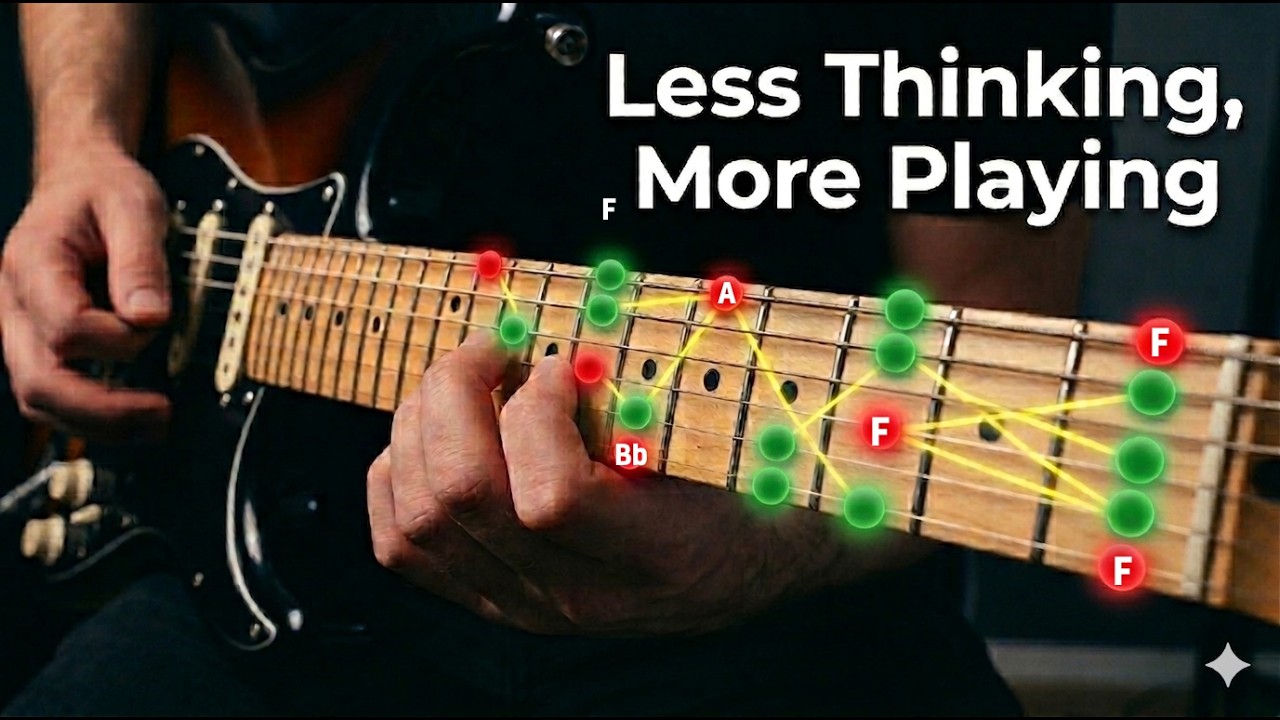
The 4 Blues Elements that will TRANFORM Your Blues Improvisation
The 4 Blues Elements That Will Transform Your Blues Improvisation
If you've ever listened to a blues guitarist and wondered how they make it sound so effortless and authentic, the answer isn't mysterious talent or suffering through decades of hardship. The truth? They've mastered a specific framework of foundational elements that create that unmistakable blues sound. In this guide, we'll break down the four essential components you need to transform your blues improvisation from amateur hour into something genuinely musical and professional.
Too many guitarists approach blues playing with vague ideas about "just feeling it" or memorizing random licks. But here's what separates the masters from everyone else: they understand the specific vocabulary and structure of blues music. When you know what you're playing and why you're playing it, something magical happens—your playing becomes both more intentional and more authentic.
Master the Four Blues Elements: Your Foundation for Authentic Playing
Think of these four elements as the pillars of blues guitar mastery. Understanding and practicing each one specifically will accelerate your growth exponentially.
Element One: Blues Chord Voicings
You need to know the standard blues voicings, including guide tones. These aren't complicated jazz chords—they're the essential foundation that holds everything together. Guide tones are the critical notes that define chord changes. When you master shell voicings (root note with guide tones), you can play a complete, professional-sounding blues form with minimal accompaniment. Even without a full band or piano outlining chords behind you, these voicings create a harmonic backbone that sounds legitimate and structured.
Element Two: Turnarounds
Turnarounds are the signature transitions that move you from one 12-bar cycle to the next. Knowing even just one solid turnaround instantly elevates your playing and makes the form feel complete. Turnarounds are what the masters use to signal "here we go again," and they're often where individual style really shines through. Learning the standard turnarounds gives you the rhythmic and harmonic punctuation marks that make blues playing sound intentional rather than rambling.
Element Three: Blues Archetypes and Phrases
This is where the real musicality lives. There are standard phrases and patterns that blues masters have developed and refined over generations. Start with B.B. King—he's the king for a reason. Study his bending techniques, his phrasing, his approach to hitting major thirds and minor thirds at just the right moments. These aren't random notes; they're carefully crafted expressions that communicate emotion through precision and vocabulary. Don't just learn the blues scale and arpeggiate chord changes—that's not what sounds bluesy. Instead, absorb the actual phrases that define the genre.
Element Four: Major and Minor Resolution
This element separates amateurs from professionals: knowing when to play a major third and when to play a minor third. This single distinction creates the tension and release that gives blues its emotional power. The interplay between major and minor tonality is fundamental to blues expression, and mastering it transforms how you approach every phrase you play.
Why Understanding Beats Feeling (And How They Work Together)
There's a common myth in blues guitar: you either have the blues in your soul or you don't. Respectfully, that's incomplete thinking. Yes, blues has a profound cultural history and emotional depth that deserves respect. But here's what the masters understand: you cannot truly feel something you don't understand. Music operates according to universal laws and principles. When you understand the specific vocabulary, the harmonic structure, and the phrasing patterns of blues, you unlock the ability to truly express emotion through your playing.
Think about language: you can't authentically express complex ideas in a language you don't understand. The same applies to blues guitar. Your brain and your heart need to work together. Learn the rules, understand the structure, practice the elements—and then your feeling becomes grounded in authentic musical knowledge rather than vague inspiration.
When you combine just one or two of these elements—say, shell voicings plus a single authentic B.B. King-style phrase—your playing transforms. Suddenly it doesn't sound like exercises; it sounds like music. Like someone who understands what they're doing. That's the power of this systematic approach.
Organize Your Practice Around These Elements
Knowing about these four elements is valuable. But here's what's even more important: using this knowledge to organize your practice specifically around each element. Rather than random practice sessions, you now have a framework. Practice your voicings until they're automatic. Drill your turnarounds until they feel natural. Study and absorb the blues phrases that move you. Work on your major and minor resolution until you instinctively know which to play.
This structured approach accelerates your progress dramatically because you're not just playing—you're systematically building mastery.
Ready to deepen your blues foundation and stop spinning your wheels with vague practice routines? The Guitar Coach Club 2.0 is specifically designed to address these foundational elements—not just for blues, but for all the essential skills required to improvise confidently in blues and rock guitar. Ready to finally break through your plateau? Apply for a free strategy session and let's map out your path to genuine blues mastery.