The 6 Lead Guitar Foundations No One Should Be Missing
The 6 Lead Guitar Foundations No One Should Be Missing
Have you ever wondered why you can instantly recognize David Gilmour, Stevie Ray Vaughan, or Joe Satriani from just one note? It's not magic—it's mastery. These legendary guitarists have spent decades perfecting their craft, but the secret to their instantly recognizable tone and expression isn't complicated theory or endless scale practice. It's something much more fundamental: they've completely mastered six mechanical foundations that most intermediate players overlook.
The uncomfortable truth is this: if you're missing even one of these foundations, your playing will always sound incomplete. You could memorize every scale in existence, but without these micro skills locked in, your guitar playing will remain stuck at a mechanical level rather than reaching the musical expression you're chasing.
Why Most Guitarists Practice the Wrong Things
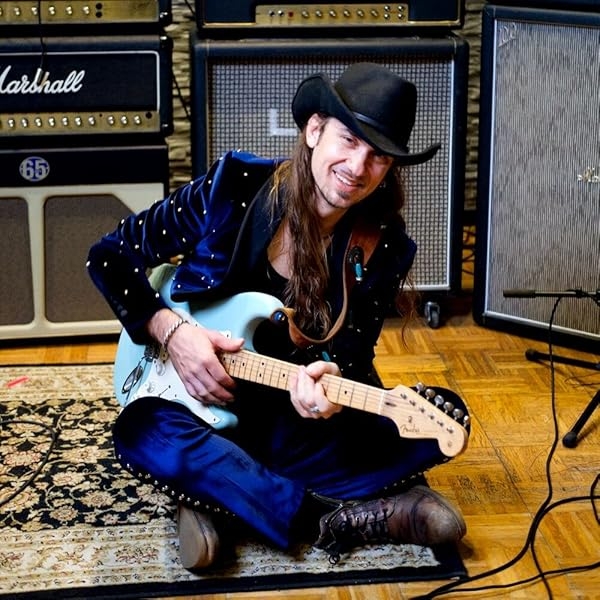
Here's what Ulrich Ellison, founder of Total Guitar Transformation Academy, has discovered after spending five years coaching hundreds of intermediate players: most guitarists are trying to solve the wrong problems.
You probably think you need to learn more scales, dive deeper into music theory, or master additional licks and techniques. But here's the reality: if you can't reliably bend a string in tune, if your vibrato sounds inconsistent, or if you can't switch between eighth notes and triplets without conscious effort, then adding more information to your brain won't help you at all.
Think of it like building a house. You wouldn't install crown molding and fancy fixtures before laying a solid foundation—the house would collapse. Your guitar playing works the same way. The six mechanical foundations are your bedrock. Master them, and you'll have the freedom to focus entirely on expression and musicality.
The Six Lead Guitar Foundations Explained
Foundation 1: String Bending — This is perhaps the most revealing technique that separates beginners from professionals. One bent note tells the experienced ear everything they need to know about your skill level. The key is bending in tune while keeping perfect time with a metronome—most players skip the metronome and develop sloppy timing without realizing it.
Foundation 2: Vibrato — Your sonic fingerprint as a player. Vibrato isn't just one technique; it's about controlling three variables: width, speed, and intensity. A wide, slow vibrato creates a David Gilmour vibe, while a fast, narrow vibrato echoes players like Gary Moore. Learning delayed vibrato—like a vocalist uses phrasing—opens up yet another expressive tool.
Foundation 3: Alternate Picking — Your right-hand engine. This needs to be so reliable and automatic that you never think about it while playing. This frees up your mental bandwidth for actual musicality.
Foundation 4: Rhythmical Subdivisions — The transmission that works with your picking engine. Seamlessly switching between eighth notes, triplets, and sixteenth notes without thinking is non-negotiable for modern lead guitar playing.
Foundation 5: Articulations — Not all notes are created equal. Accented notes, long notes, short notes, and muted notes each serve a purpose. Your right hand's primary job is bringing these articulations to life, creating dynamics and interest in every phrase you play.
Foundation 6: Tone Control and Dynamics — Electric guitar offers something acoustic players don't have: the ability to control loudness both mechanically (through pick attack and pressure) and electronically (through volume knob control). Mastering both methods gives you complete dynamic range.
The Practice Approach That Actually Works
So how do you build these foundations? Start with string bending. Put on a drone in a key—F# works well because you can then practice all twelve keys equally. Set your metronome to 70-80 BPM and systematically work through every string, bending whole steps with precision. Can you bend in tune while keeping time? That's the critical question.
Stevie Ray Vaughan's guitar tech revealed that Stevie would spend at least 20 minutes before every single show just practicing his bends. Twenty minutes. Why? Because he understood that in-tune bending is what separates the professionals from everyone else.
The beautiful thing about mastering these six foundations is that they become automatic. Once locked in, they require zero conscious thought. This means your brain is finally free to do what it should be doing: telling a story, expressing emotion, and creating music that moves people.
Ready to finally break through your plateau and master these foundational skills? Apply for a free strategy session and let's map out your personalized path to guitar freedom.