The MISSING Link Between Scales And Music
The Missing Link Between Scales and Music: How to Turn Theory Into Real Solos
If you've ever felt frustrated playing scales that sound mechanical and lifeless, you're not alone. Most guitar players who start improvising hit the same wall: they can play the notes, but they can't make them sound musical. In this comprehensive guide, we'll explore the missing connection between music theory and the actual practice of playing expressive, flowing solos.
With over 25 years of professional experience and thousands of performances worldwide, guitarist Ulrich Ellison has worked with hundreds of students at Total Guitar Transformation Academy to solve this exact problem. The solution isn't about learning more scales or theory—it's about understanding what separates a technically competent guitarist from one who truly captivates an audience.
Scales Are Just the Skeleton: Understanding the Framework
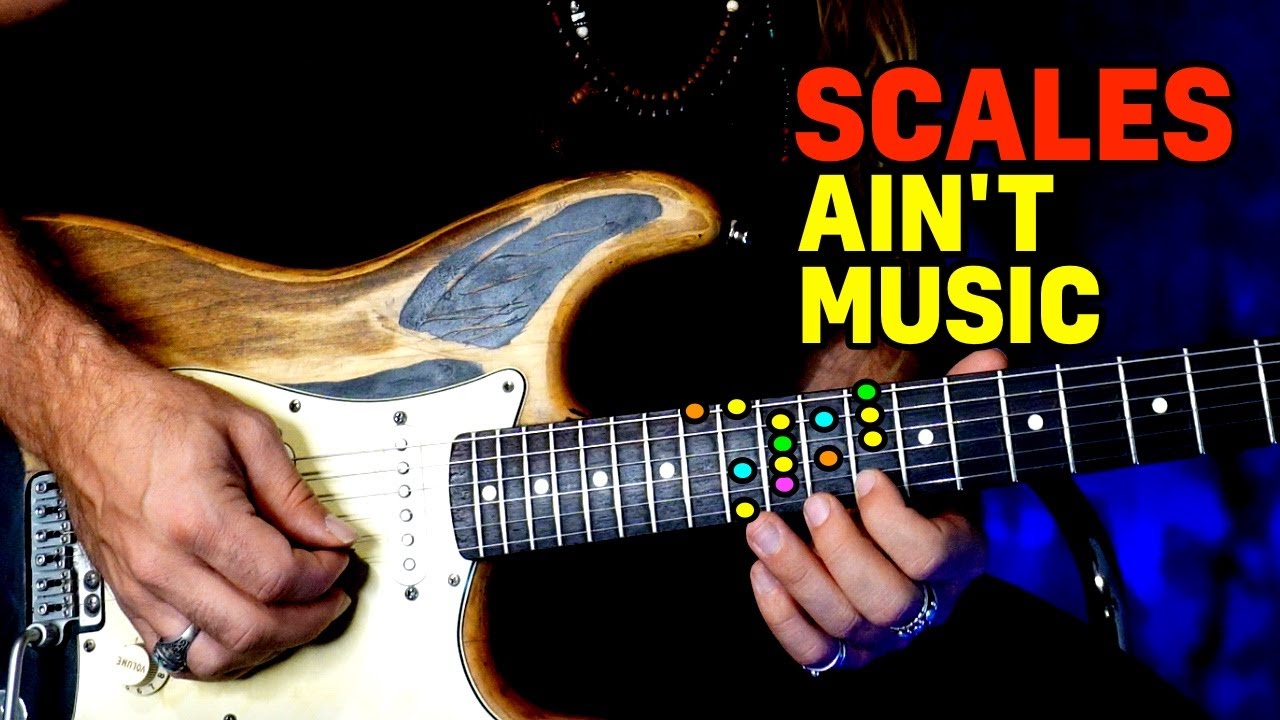
Here's the fundamental mindset shift you need to make: scales are not music. Think of a scale like a skeleton you'd study in a biology class. Yes, every human being has a skeleton, but we're so much more than bone structure. We have skin, muscles, emotions, and complex systems. Music works the same way.
A scale is the underlying framework—the skeleton of musical possibility. But to transform those notes into living, breathing music, you need to add layers of expression, nuance, and intentionality. This is where most guitarists get stuck. They memorize pentatonic shapes and modes, practice them diligently, but when they try to improvise, something feels hollow.
The breakthrough comes when you start viewing scales as raw material rather than finished products. Your job as an improviser is to sculpt and shape these notes into meaningful musical statements. This requires understanding several key components that we'll explore in detail.
Master Phrasing and Right-Hand Articulation for Musical Expression
The first puzzle piece is phrasing. This is how you shape individual notes and groups of notes into cohesive musical ideas. One of the most powerful practice methods involves using a drone—specifically an A note drum set to the root note. Rather than mechanically running through scale shapes, you begin sculpting those notes with intention.
Using techniques like bends, vibrato, and slides, you assign rhythmical values to your notes. This might sound elementary, but here's the challenge: Have you actually evaluated the quality of your phrasing? Are your bends perfectly in tune? Does your vibrato serve the musical phrase, or is it just something you add without thought? These details matter more than most guitarists realize.
The second critical component is right-hand touch and articulation. This is rarely discussed but absolutely essential for musical solos. Think about how language works. When you speak, you don't deliver every word at the same volume and intensity. You use punctuation, pauses, and emphasis. You accent certain words. Music requires the same approach.
When many guitarists practice scales and improvisation, they hit every note with the same velocity and strength—100% power across the board. This creates that mechanical, lifeless quality. The musicians who captivate audiences use dynamic touch. They accent certain notes, let others fall back, create pauses, and build intensity strategically.
Imagine the musical phrase before you play it. If you think the phrase is boring and flat, that's exactly how it will sound. But if you mentally rehearse it with punch, emphasis, and intention, your fingers will naturally follow. This mental preparation is where many players miss an opportunity. Your imagination must lead your technique.
Build a Core Vocabulary That Becomes Second Nature
To make all of this work, you need a well-developed core vocabulary of licks, phrases, and musical ideas that become almost automatic—like they're hardwired into your nervous system. This means when inspiration strikes in the moment, you're not thinking about scale degrees or theory. You're playing from feel and experience.
This vocabulary develops through deliberate practice. Record yourself practicing phrases with a drone. Really listen to the quality of your bends and vibrato. Experiment with different rhythmical placements and right-hand dynamics. Over time, these elements become part of your musical DNA, and you can access them intuitively during actual performance.
The gap between sounding like you're reading from a scale sheet and sounding like you're having a real musical conversation comes down to these fundamentals: phrasing precision, articulation awareness, and intentional vocabulary building. None of this requires learning new theory or discovering hidden scale shapes. It requires honest self-evaluation and focused practice on the elements that actually matter.
Ready to finally break through your plateau and unlock the musicality hidden within your playing? Apply for a free strategy session and let's map out your personalized path to guitar freedom and expressive improvisation.