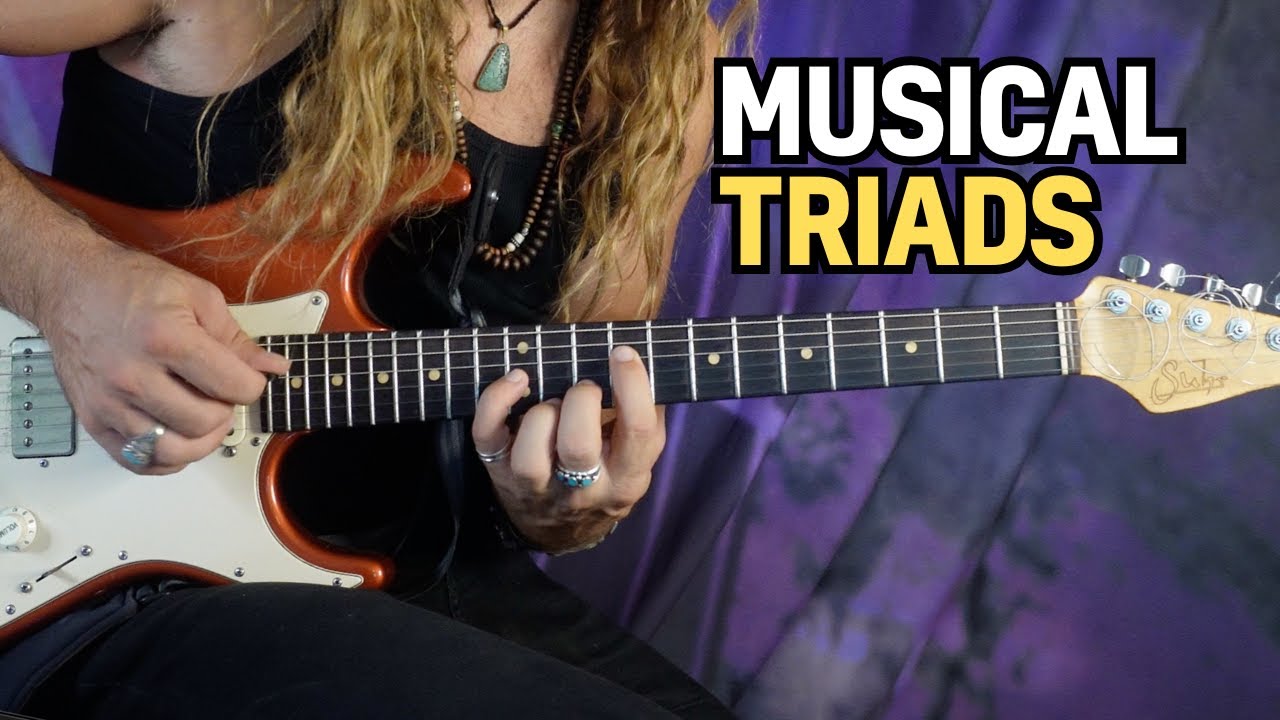
The Simple Triad Approach That Will SKYROCKET Your Playing
The Simple Triad Approach That Will Skyrocket Your Playing
If you've spent time learning triad shapes only to find your solos sound stale and uninspired, you're not alone. Many guitarists hit this same wall—they know the triads, they play them over the correct chords, but something feels missing. The problem isn't your technique; it's your approach.
Ulrich Ellison, founder of Total Guitar Transformation, has helped hundreds of guitarists break through this exact limitation. The secret? Understanding that playing the obvious triad shapes over their matching chords is just the beginning. True melodic mastery comes from knowing when—and how—to strategically break those rules.
Strategy 1: Play Non-Matching Triads Over Your Chords
The first breakthrough comes from a counterintuitive idea: don't always play the obvious triad over the chord you're soloing over. Instead, choose a triad from within the same key that creates harmonic interest and tension.
For example, when soloing over an E major chord, try playing a B major triad instead. B major is the five chord in E major, so it's still part of the harmonic landscape—but it creates something far more musical than simply stacking E major notes. The tension builds, and when you resolve back to the E major triad, the payoff feels earned and satisfying.
This principle works across different chord types. Over a major chord, the five is an excellent choice. Over minor chords, try experimenting with the relative major. The key is selecting triads that live within your scale but create harmonic color and forward momentum rather than stagnation.
When you apply this strategy, you'll immediately notice your solos jump several levels forward in terms of melodic interest. It's the difference between playing notes that technically fit and crafting a solo that tells a story.
Strategy 2: Add the Hendrix Chordal Approach for Texture and Phrasing
Once you've mastered playing non-matching triads, the next level is adding embellishment notes within and around those triad shapes. This is where the Hendrix chordal approach comes into play—a technique that weaves hammer-ons and pull-offs through your triad positions to create fluid, musical phrasing.
Rather than playing pure triadic notes in isolation, you'll add strategic passing tones. For instance, you might add a sixth or hammer onto the major third, creating movement and groove within each triad shape. The beauty of this method is that everything remains rooted in the triad structure—you're just embellishing it intelligently.
Start by identifying your three primary triad positions on the fretboard. Then, discover the natural embellishment opportunities within each shape. You can move horizontally across these positions, weaving hammer-ons and pull-offs to connect them smoothly. The result is a solo that sounds orchestral and intentional, not random or technically showy.
What makes this approach so powerful is its versatility. It works over jazz and R&B backing tracks, but it also translates beautifully to rock contexts with power chords and heavier music. The chordal texture adds sophistication regardless of genre.
Putting It All Together: From Theory to Expression
The transformation from adequate to exceptional soloist happens when you stop viewing triads as rigid shapes and start seeing them as tools for harmonic storytelling. You already know the shapes. The question becomes: what stories can you tell with them?
By combining these two strategies—playing non-matching triads and adding chordal embellishments—you create solos with genuine musicality. Your note choices become intentional. Your phrasing becomes expressive. Your guitar voice becomes distinctly yours.
The most important realization is this: skyrocketing your playing doesn't require learning more shapes or more techniques. It requires understanding the principles behind what you already know and applying them with purpose and creativity.
Ready to finally break through your plateau and take control of your melodic voice? Apply for a free strategy session and let's map out your path to guitar freedom. You'll discover exactly what's holding back your playing and the specific steps to transform into the confident, expressive lead guitarist you're meant to be.