The Ultimate Practical Ear Training Class For Guitar Improvisers
The Ultimate Practical Ear Training Class for Guitar Improvisers
When it comes to guitar improvisation, one skill separates the good players from the greats: a well-trained ear. Whether you're into blues, rock, metal, or jazz, your ability to hear and respond to music in the moment is key to unlocking your full potential as a guitarist. In this post, we'll dive into practical ear training techniques that will enhance your improvisational skills and give you the tools to create music more effortlessly. Let's get started!
Why Ear Training is Essential for Guitarists
Think about legendary players like Stevie Ray Vaughan, Jimi Hendrix, or B.B. King. While they weren't necessarily theory experts, their ears were their superpower. They could hear and translate what they felt into music with precision and emotion. Ear training isn't just for classical musicians—it's for anyone who wants to build a deeper connection with their instrument.
What exactly does ear training do for you as a guitarist? It helps you:
- Recognize intervals, chords, and melodies more intuitively.
- Develop your ability to play what you hear in your head.
- Improve your improvisation by reacting to the music in real-time.
- Strengthen your understanding of the fretboard.
Now, let’s break down some actionable ear training exercises that you can start implementing today.
Make Friends with Intervals
Intervals are the building blocks of music. If you want to master improvisation, you need to get comfortable with recognizing, singing, and playing intervals anywhere on the fretboard. Think of getting to know intervals as building a friendship. Just like you'd learn a new friend's name and personality, you want to understand the "personality" of each interval.
Here’s a simple exercise to get started:
- Choose a drone note: For example, start with a G note. Play this drone consistently in the background.
- Play and sing the intervals: Begin with unison (G to G) and then move to the octave (G to the G one octave higher). Continue exploring other intervals like the fifth, major third, and minor third.
- Associate intervals with songs: Assign a familiar melody to each interval. For instance, the octave might remind you of "Somewhere Over the Rainbow," while the perfect fifth could bring to mind "The Star-Spangled Banner."
- Write it down: Create a table where you list each interval, a song that represents it, and the emotion it evokes. This will help you build a strong mental connection.
Practicing this will not only train your ear but also improve your ability to move fluidly across the fretboard when improvising.
Sing What You Play
One of the most effective ways to internalize music is to sing what you're playing. Don’t worry—you don’t need to be a professional singer! The goal here is to connect your ears, voice, and fingers in a way that strengthens your musical intuition.
Here’s how to do it:
- Start with simple scales: Play a G major scale slowly and sing each note aloud as you play it.
- Match pitches: Try to match the pitch of your voice with the notes on your guitar. If it feels tricky at first, keep practicing—it gets easier with time.
- Experiment with melodies: Once you’re comfortable with scales, try singing simple melodies, like "Happy Birthday," while finding the notes on your guitar.
This exercise bridges the gap between your inner ear and your fretboard, making your playing feel more natural and expressive.
Use Technology to Boost Your Training
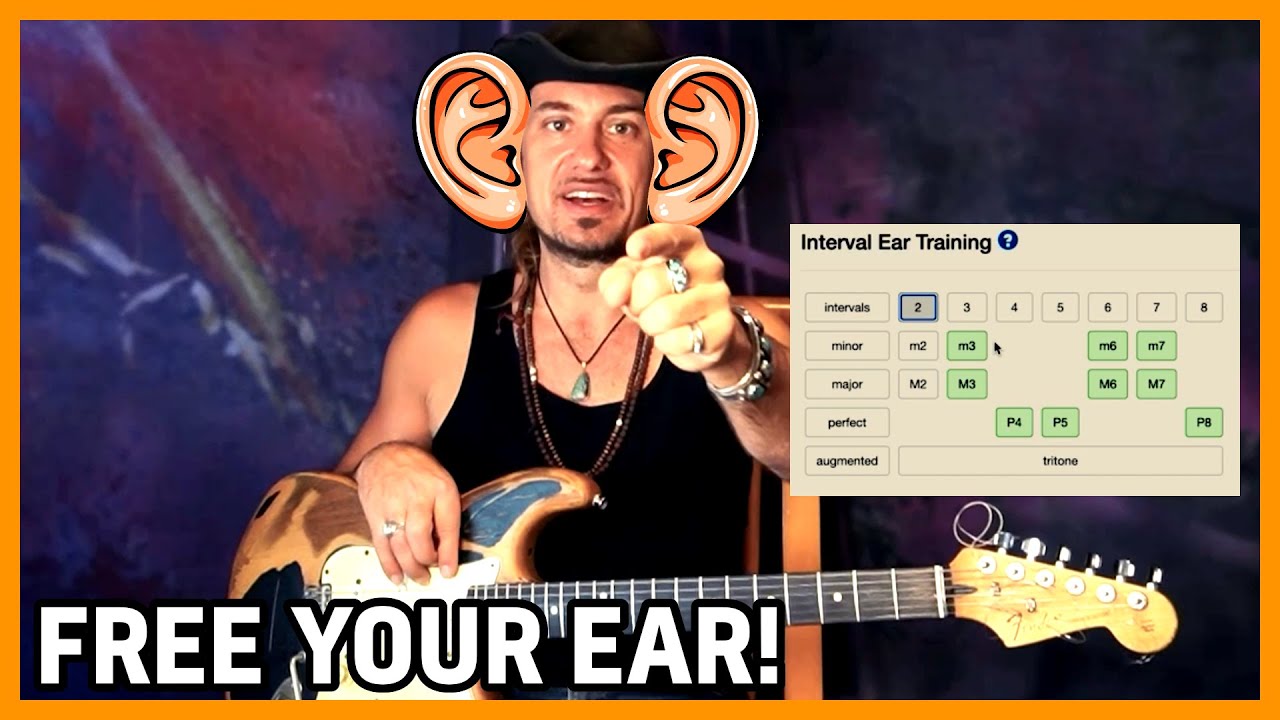
Finally, take advantage of modern tools to support your ear training journey. There are several ear training apps available that can help you practice identifying intervals, chords, and melodies. These apps are particularly useful because they offer structured exercises and immediate feedback, which can accelerate your progress.
Here are a few tips for using ear training apps:
- Set a daily practice goal: Even 10-15 minutes a day can make a big difference over time.
- Focus on weak areas: Struggle with minor intervals or seventh chords? Use the app to target those specific skills.
- Combine with your guitar: Whenever possible, replicate the app's exercises on your guitar to reinforce the connection between your ear and your instrument.
By combining traditional ear training techniques with technology, you’ll see faster and more noticeable results in your playing.
Ready to finally break through your plateau? Apply for a free strategy session and let's map out your path to guitar freedom.