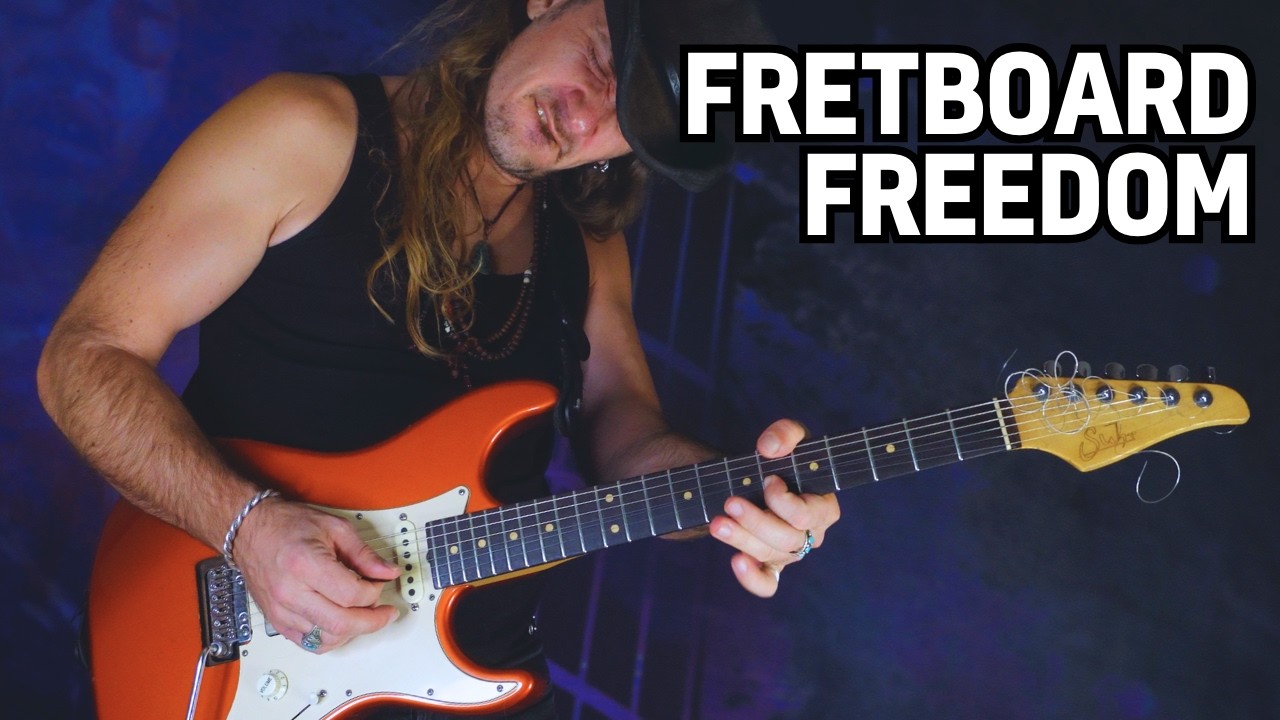
These Pentatonic Shapes will UNLOCK your fretboard
These Pentatonic Shapes Will Unlock Your Fretboard
Are you stuck in a single pentatonic box whenever you solo? Do you find yourself relying on the same beginner licks when it’s time to improvise? If so, you’re not alone—and this is the breakthrough you’ve been waiting for. Today, we’re diving into two-string pentatonic shapes that will help you move horizontally across the fretboard, unlocking your creativity and confidence. Let’s break free of the box and explore new possibilities!
Why Two-String Pentatonic Shapes Are Game-Changers
Many guitarists fall into the habit of sticking to one pentatonic box, often the first position they learned. While there’s nothing inherently wrong with that box, it can limit your musical expression. Two-string pentatonic shapes, however, allow you to move horizontally across the fretboard, connecting the five pentatonic positions seamlessly. Think of it like riding an elevator: you can get to any "floor" of the pentatonic scale and step out wherever you want.
Here’s the beauty of these shapes: they’re simple, repetitive, and easy to memorize. Once you lock them in, they can be applied in any key, giving you the freedom to solo anywhere on the neck. Plus, they encourage more creative phrasing, helping you break out of your “default” licks and explore new rhythmic and melodic ideas.
How to Play the Two-String Pentatonic Shapes
Let’s start with the basics. These shapes use the high E and B strings, and you can move them up and down the neck to cover all five pentatonic positions. Start with the open strings:
- Shape 1: Open E and B
- Shape 2: Move up two frets
- Shape 3: Slide up another two frets
- Shape 4: Continue up the neck in the same pattern
Once you reach the 12th fret, the shapes repeat. Practice them slowly, focusing on clean picking technique. Use alternate picking (down-up-down-up) to maintain even rhythm. Experiment with starting on either a downstroke or an upstroke to see what feels most natural for you.
When you’re ready, try these shapes over a simple backing track. You can find an E minor backing track linked in the video description. Play eighth notes to keep things steady, and focus on locking into the groove.
Take It Further: Creative Techniques with Two-String Shapes
Now that you have the basic shapes, it’s time to add some flair. Here are a few techniques to make your playing more expressive:
1. Use Slides to Connect Shapes
Instead of jumping from one shape to the next, try sliding into the new position. For example, slide the last note of one shape into the first note of the next. This creates a smooth, flowing sound and adds a vocal-like quality to your playing.
2. Experiment with Rhythmic Motives
Don’t just play straight eighth notes—get creative with your rhythms. Start simple by adding pauses or accents to create syncopation. As you get more comfortable, explore cross-rhythms (playing in patterns that don’t align with the 4/4 beat). For example, try a seven-note rhythmic cell: play seven notes, then repeat the pattern. This can create exciting tension and a more sophisticated sound.
3. Expand to Other String Pairs
While we’re focusing on the E and B strings, these shapes can be applied to any pair of strings. Try moving the concept to the G and D strings or even the A and low E. The possibilities are endless, and this approach will help you see the fretboard as one connected whole rather than isolated boxes.
The key to mastering these techniques is consistent practice. Take your time with each shape and technique, and don’t rush to play fast. Speed will come naturally as you build confidence and muscle memory.
Break Free and Play with Confidence
Feeling stuck in your playing is frustrating, but it doesn’t have to be permanent. The two-string pentatonic shapes are a powerful tool for breaking out of the box and discovering new creative possibilities on the fretboard. Whether you’re jamming with friends or exploring your own musical ideas, these shapes will give you the freedom to express yourself with confidence.
Ready to finally break through your plateau? Apply for a free strategy session and let’s map out your path to guitar freedom.