Unlock Modal Triad Improvisation in Under 10 Minutes
Unlock Modal Triad Improvisation in Under 10 Minutes
You've learned all your triad shapes. You know them up and down the neck. Yet when you start improvising, something feels off. The shapes don't translate into musical, flowing solos. You're technically correct, but musically incomplete. If this resonates with you, you're not alone—and there's a solution that's helped hundreds of guitarists overcome this exact barrier.
The problem isn't your technique. It's your approach. Most guitarists learn triads in isolation, treating them as individual building blocks rather than as part of a larger improvisational vocabulary. Ulrich Ellison, founder of Total Guitar Transformation Academy and a professional guitarist for over 25 years, has developed a layered methodology specifically designed to bridge this gap. One of his most powerful techniques is called triad pairing—and it can transform your modal improvisation in weeks, not years.
Understanding Triad Pairs: The Foundation of Musical Improvisation
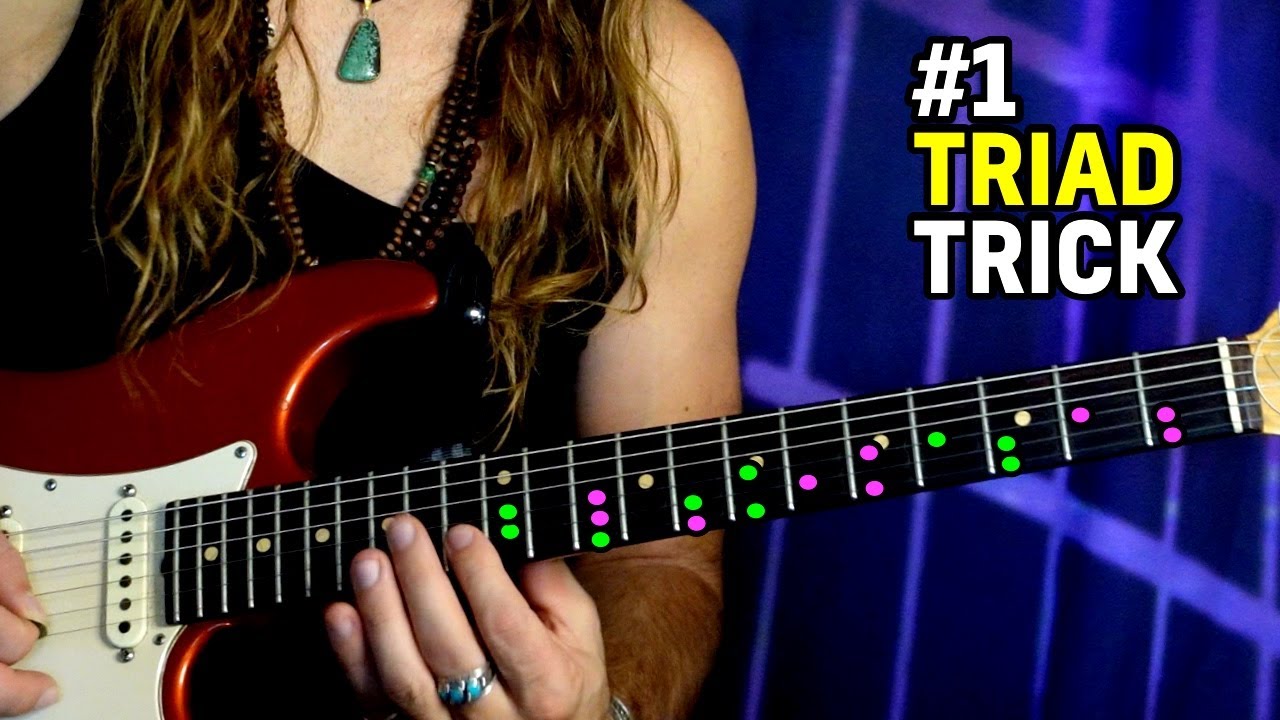
So what exactly is a triad pair? Rather than playing triads randomly or in isolation, you're connecting two triads in succession to create fluid, melodic lines. In the video demonstration, Ellison shows how alternating between G major and F major triads generates coherent, musical passages that sound intentional and professional.
The beauty of this approach lies in its simplicity combined with its power. You're not learning completely new material—you're repositioning knowledge you already possess. Once you can play your G major and F major triads across the neck, you simply practice moving between them in musical ways. Start on the top strings, then transition to middle strings, then explore different areas of the fretboard. The vocabulary remains consistent; only the position changes.
This isn't just about mechanical finger movement. When you hear triads resolving into one another, your ear begins to anticipate the movement, making your playing sound less like an exercise and more like actual music. Listeners will perceive intention and musicality, even though you're working with fundamental building blocks.
Applying Triad Pairs Across Modal Contexts
Here's where the real magic happens: once you master triad pairing in one modal context, you can apply the same vocabulary across all modal situations. This is the breakthrough moment that separates average improvisers from confident ones.
Consider C major and its modes—Ionian, Dorian, Phrygian, Lydian, Mixolydian, Aeolian, and Locrian. They all contain the same note material. That means your G and F major triad pair that works beautifully over C Mixolydian also works over D Dorian, E Phrygian, and every other mode of that harmonic family. You're not learning seven different vocabulary sets; you're learning one vocabulary and discovering its endless applications.
This efficiency is crucial for guitarists who want to develop genuine improvisational skills without spending years memorizing isolated patterns. Your practice time yields exponentially greater results because each concept you learn multiplies across multiple musical contexts.
Blending Triad Pairs with Your Existing Vocabulary
A critical insight from Ellison's teaching is that triad pairs don't exist in a vacuum. The most musical improvisers blend them seamlessly with their pentatonic scales, single-note runs, and other vocabulary. When triads stand alone, they can sound obvious or even mechanical. But when they're integrated into a larger improvisational tapestry, they become invisible—the listener only hears the music, not the technique beneath it.
The training process involves subtle application. Sometimes you'll target just one triad. Other times you'll weave both members of your triad pair into a longer melodic line. The key is making intentional choices rather than relying on patterns. This develops your ear and your decision-making as an improviser, which ultimately matters far more than perfect execution of any single technique.
For this to work effectively, you need to approach triad pairs as one layer within a comprehensive framework. Ellison's Layered Lead Guitar Method includes seven distinct layers that work together to create genuine improvisational freedom. Triads are powerful, but they're most effective when combined with other approaches and practiced with intention.
Ready to finally break through your plateau and develop the improvisational skills that separate confident players from the rest? Apply for a free strategy session with Total Guitar Transformation Academy. In just one session, we'll identify exactly which skills you need to focus on and create a personalized roadmap to get you playing with genuine musical authority—in weeks, not years.