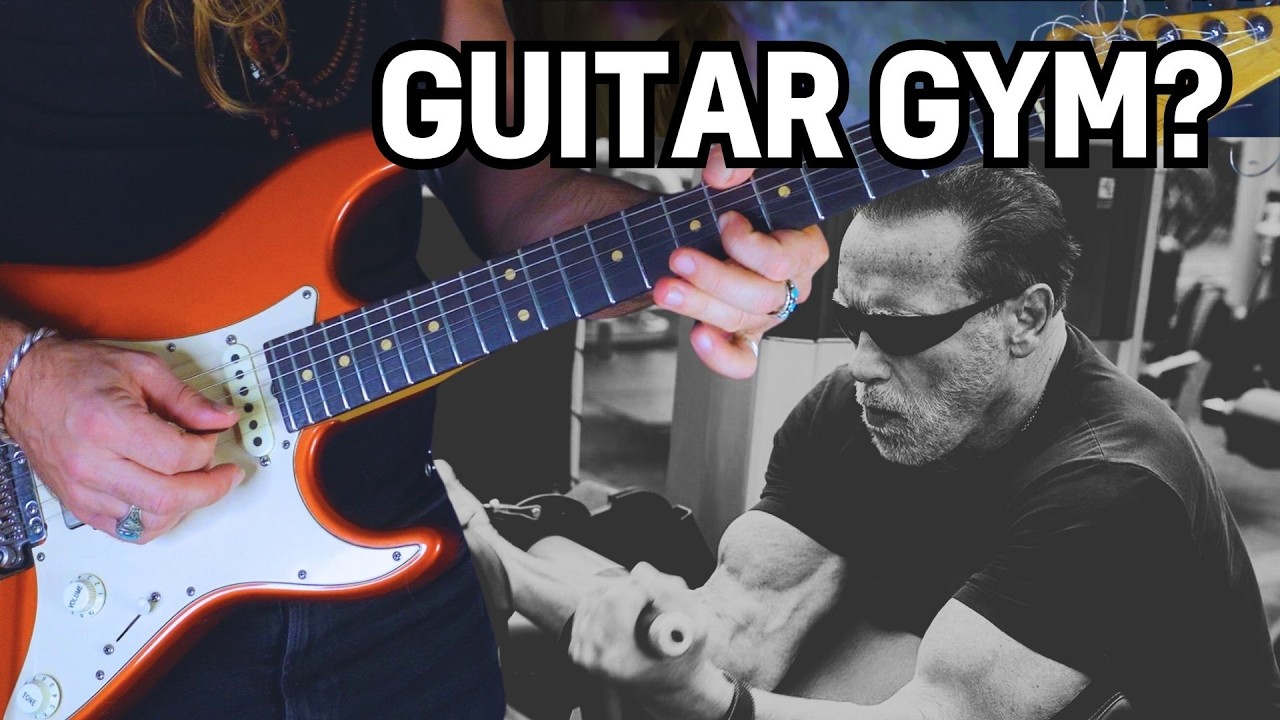
What do Weighlifting and Guitar Practice Have in common?
What Do Weightlifting and Guitar Practice Have in Common?
Have you ever wondered why you practice guitar consistently but still aren't seeing the results you want? It can feel a lot like going to the gym regularly and not achieving that dream physique. The truth is, both weightlifting and guitar practice share some fundamental principles. By understanding and applying these principles, you can transform your guitar playing in ways you never thought possible.
In this post, we’ll dive into the surprising similarities between these two disciplines and explore how a structured approach to guitar practice can help you break through your plateaus and unlock your full potential on the fretboard.
Consistency: The Foundation of Progress
One of the most striking similarities between weightlifting and guitar practice is the need for consistency. Just like you can’t expect to become a bodybuilder after one week in the gym, you won’t master the guitar overnight. Progress happens over time, through small, sustained efforts.
Consistency doesn’t mean practicing for hours every day—it means showing up regularly, even if it’s just for 30 minutes. Focused, intentional practice is far more effective than hours of mindless noodling. Commit to a routine and stick to it, and you’ll start to see results.
Remember, taking breaks is just as important as showing up. The growth cycle—practice, rest, and revisit—allows your brain and muscles to process what you’re learning. Without rest, you risk burnout and slower progress.
Focus: Targeting Specific Skills
In weightlifting, if you want stronger legs, you don’t just lift random weights—you target specific exercises like squats or lunges. The same principle applies to guitar practice. If you want to improve your speed, accuracy, or expression, you need to focus on specific exercises that build those skills.
For example, if you’re struggling with fretboard navigation, try this simple exercise: set a metronome to a slow tempo (e.g., 80 BPM) and practice finding all the C notes on the fretboard. Play one note per bar, making sure to hold each note as long as possible while visualizing the next one. This trains your ability to anticipate and transition smoothly between notes.
Here’s the key: every time you pick up your guitar, you should know exactly what you’re working on. If someone were to interrupt you mid-practice and ask, “What are you focusing on right now?” you should be able to answer without hesitation. Clarity and intention are the cornerstones of productive practice.
Resistance: Pushing Your Limits
In weightlifting, progress happens when you push against resistance—whether it’s heavier weights or more challenging exercises. Guitar practice is no different. You need to create resistance in your routine to push your limits and build your “guitar muscles.”
Resistance can take many forms. It could be increasing the tempo of your metronome, tackling a challenging piece of music, or working on an unfamiliar technique. The key is to find a balance: the exercise should be challenging enough to stretch your abilities, but not so difficult that it feels impossible.
For example, if you’re working on alternate picking, start at a comfortable tempo and gradually increase the speed as you gain control. Track your progress over time to see how much you’ve improved. Just like in the gym, seeing measurable progress is incredibly motivating.
Take Your Guitar Practice to the Next Level
Practicing guitar effectively doesn’t have to feel like a guessing game. By applying the principles of consistency, focus, and resistance, you can take control of your progress and start seeing real results. If you’re ready to unlock your full potential, I invite you to download my TGT Practice Matrix. This is the framework I use to help students transform their playing in just 100 days.
Additionally, for only $1, you can try out our TGT Guitar Coach Club and start building a solid practice routine today. Why wait to see the results you’ve been dreaming of? Let’s make it happen together.
Ready to finally break through your plateau? Apply for a free strategy session and let's map out your path to guitar freedom.