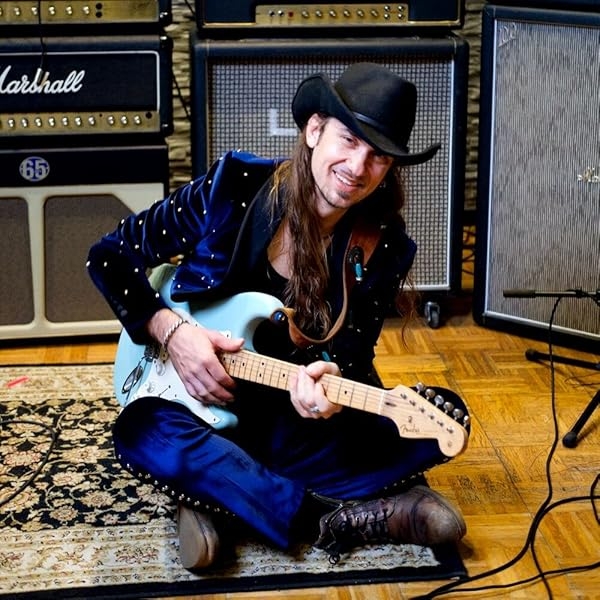
When A Rock Guitarist Tries To Play Country
When a Rock Guitarist Tries to Play Country: Essential Techniques and Surprising Discoveries
There's something fascinating about stepping outside your musical comfort zone. For many rock guitarists, country music can seem like an entirely different language—complete with its own vocabulary, phrasing, and soul. But what happens when a dedicated rocker decides to explore country guitar? The results might surprise you, and more importantly, the techniques you'll discover can expand your playing in unexpected ways.
Ulrich Ellison, founder of Total Guitar Transformation Academy, recently embarked on exactly this journey. His exploration reveals that country guitar isn't as mysterious or inaccessible as rock players might think. In fact, there's a surprising amount of common ground between the two genres, and learning country techniques can actually make you a more versatile and expressive guitarist overall.
The Foundation: Understanding Country's Signature Sound
When most people think of country guitar, certain sonic elements immediately come to mind. One of the most recognizable is what musicians call "playing the six"—a technique that creates that distinctive country flavor almost instantly. This involves executing a chromatic walk down on the sixth note of a scale, typically over a simple chord progression.
The beauty of this technique is its simplicity and immediate payoff. Even if you've never played country music before, incorporating this single element into your playing can transform an ordinary progression into something unmistakably country. It's like having a sonic shortcut that signals your musical intent to listeners right away.
Beyond the sixth, country music relies heavily on major pentatonic scales. While rock guitarists often reach for pentatonic scales instinctively, country players use them in distinctly different ways—with different rhythmic phrasing, bending techniques, and note selection that gives the genre its characteristic twang and expressiveness.
Blending Blues and Country: The Mixolydian Connection
Here's where things get interesting for rock players: country music needs a dose of blues to sound authentic. This is where the Mixolydian mode enters the picture—a scale that combines major tonality with a flat-7 for that bluesy, major sound that defines modern country guitar.
The archetype lick is fundamental to understanding this sound. This isn't complicated—it's a systematic approach to embellishing chord tones using hammer-ons and double stops. By learning this basic framework, you can create hundreds of variations that sound distinctly country while staying grounded in major pentatonic thinking that rock players already understand.
The key is using hybrid picking to keep these notes short and punchy, maintaining the rhythmic drive that country music demands. This technique prevents the muddy, sustained tone that would undermine the genre's clarity and snap.
Putting It Together: The Hybrid Picking Revolution
What ties all these elements together is hybrid picking—a technique that combines pick and fingers to execute the double-stop phrasing that defines country guitar rhythm work. This isn't an arcane technique reserved for Nashville session players. It's an accessible skill that any dedicated guitarist can master with focused practice.
The practical application is straightforward: take your basic chord progression (a simple 1-4-5 progression works perfectly), and apply the archetype lick across each chord. Instead of sliding around the fretboard chaotically, you "roll" from one chord to the next, staying in a comfortable region while maintaining clear definition and rhythm.
What emerges is undeniably country in character—yet built on principles that rock players already understand. The major pentatonic scale is still your friend. The chord tones still matter. The difference is in the application: the phrasing, the rhythm, the articulation, and the specific techniques that give country music its distinctive voice.
The remarkable truth is that you don't need to be a lifelong country enthusiast to sound convincing in the genre. You don't need to spend years studying Nashville players or move to Tennessee to absorb the culture. What you need is understanding—the specific techniques, the sonic elements, and the rhythmic approach that define country guitar playing.
Whether you're a dedicated rock player looking to expand your toolkit or someone curious about exploring new musical territory, country guitar offers tangible, learnable techniques that will make you a more versatile and expressive musician. The journey from "rock guitarist" to "someone who can play country convincingly" is shorter than you might think.
Ready to expand your guitar vocabulary and master the techniques that cross genre boundaries? Apply for a free strategy session with Total Guitar Transformation Academy and discover how to unlock new styles and techniques that will take your playing to the next level.