WHY Your Bends Are Still Lacking And How To Fix It FAST
Why Your Bends Are Still Lacking (And How to Fix It Fast)
String bending is one of the most expressive techniques in guitar playing, but it’s also one of the hardest to master. If you’ve ever wondered why your bends don’t sound as smooth or confident as players like David Gilmour, you’re not alone. Many guitarists struggle with bends, but the good news is that with the right focus, you can fix this fast. In this guide, I’ll walk you through the common mistakes holding you back and share powerful tips to improve your bending technique today.
Mastering Thumb Position for Better Control
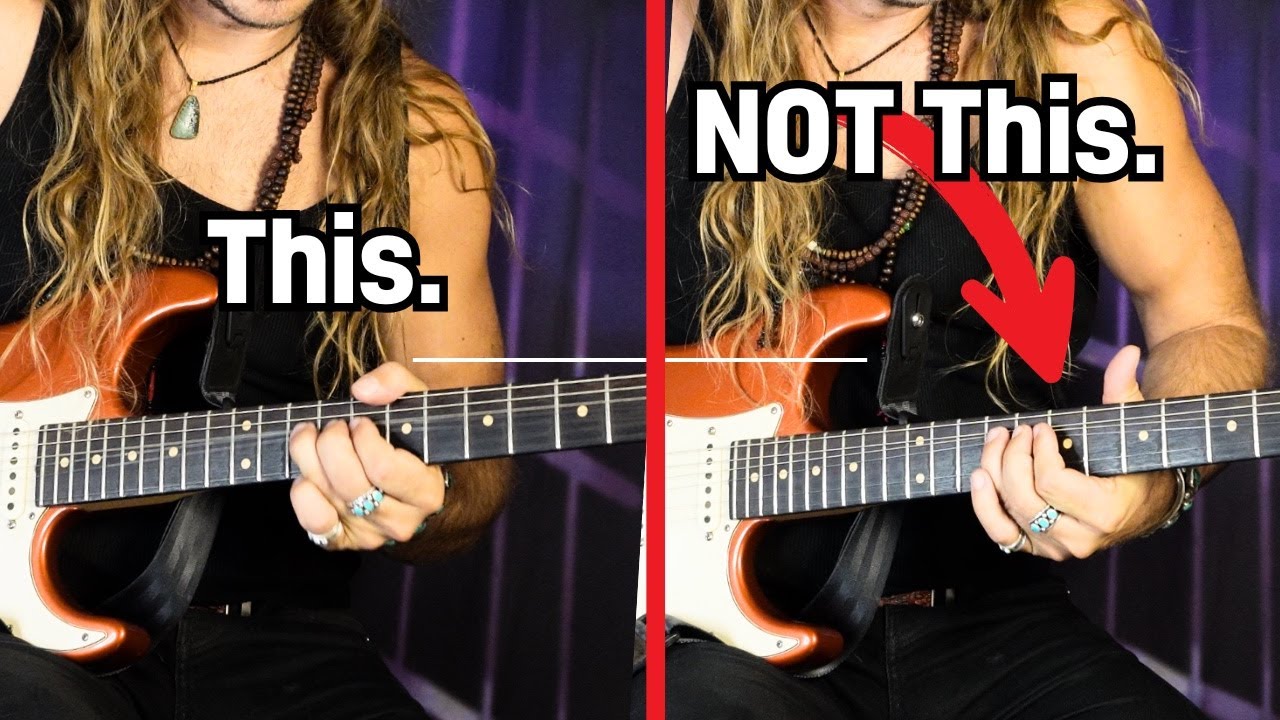
One of the most common issues with string bending stems from improper thumb positioning. Your thumb plays a crucial role in providing the counter-pressure needed to bend notes effectively. If your thumb is too far behind the neck, your fingers will lack the leverage and stability needed for a clean bend.
Instead, make sure your thumb is visible over the fretboard when you bend. This position creates a strong anchor point, allowing your fingers to pull the string with precision. Here’s a quick exercise:
- Play a note on the G string in the 10th fret.
- Ensure your thumb is positioned securely over the neck.
- Perform a slow half-step bend and listen for pitch accuracy.
Notice how this grip improves your control and clarity. Just by adjusting your thumb placement, you’ll unlock a whole new level of bending stability.
Using Finger Support for Stronger Bends
Another mistake I often see is relying too much on a single finger to execute bends. While it’s tempting to bend with just your ring finger, you’re missing out on the power and stability that comes from supporting it with your middle and index fingers.
Here’s why this matters: string tension varies across the fretboard, and using multiple fingers distributes the effort. For example, when bending a whole step on the high E string, your other fingers can help absorb the tension and ensure smoother motion. Try this for yourself:
- Use all three fingers (index, middle, and ring) to bend a note on the B string at the 12th fret.
- Focus on keeping the string under control throughout the bend.
With practice, this technique will make your bends sound fuller and more consistent, while also reducing strain on your fingers.
Eliminate Unwanted Noise with Proper Muting
Unwanted string noise can ruin even the best bends. To achieve clean bends, you’ll need to master muting with both hands. Start by flattening your left-hand fingers slightly as you bend. This creates a “scooping” effect that pushes adjacent strings out of the way, like a snowplow clearing a path. Be sure the strings don’t touch your fingernails, as this can introduce extra noise.
Next, incorporate your right hand for additional muting. Use the palm of your picking hand to gently mute the strings below the one you’re bending. If you’re bending on the B string, you can also use your picking-hand middle finger to mute the high E string. This two-handed approach ensures that no stray vibrations interfere with your bend.
Here’s an exercise to dial in your muting technique:
- Choose a note to bend on the G string.
- Focus on scooping the strings under your left-hand fingers.
- Mute the lower strings with your picking-hand palm.
As you practice, you’ll notice how much cleaner your bends sound, giving your playing a more professional polish.
Bonus: Train Your Ear for Pitch Accuracy
Even with perfect technique, your bends will fall flat (literally) if your ears aren’t trained to hear the target pitch. String bending is as much an ear training exercise as it is a physical technique. Start by playing the note you want to bend to, then bend into it, matching the pitch as closely as possible.
For example, if you’re bending from the 10th fret of the B string to the pitch of the 12th fret, play the 12th fret note first. Let it ring out, then try to bend the 10th fret note until it matches. Repeat this process slowly, paying careful attention to your intonation.
Over time, this practice will help you develop a stronger connection between your ears and your fingers, ensuring your bends always hit the mark.
With these tips in your toolkit, you’re well on your way to mastering the art of string bending. Remember, it’s not just about technique—it’s about developing the confidence to make your guitar sing.
Ready to finally break through your plateau? Apply for a free strategy session and let's map out your path to guitar freedom.