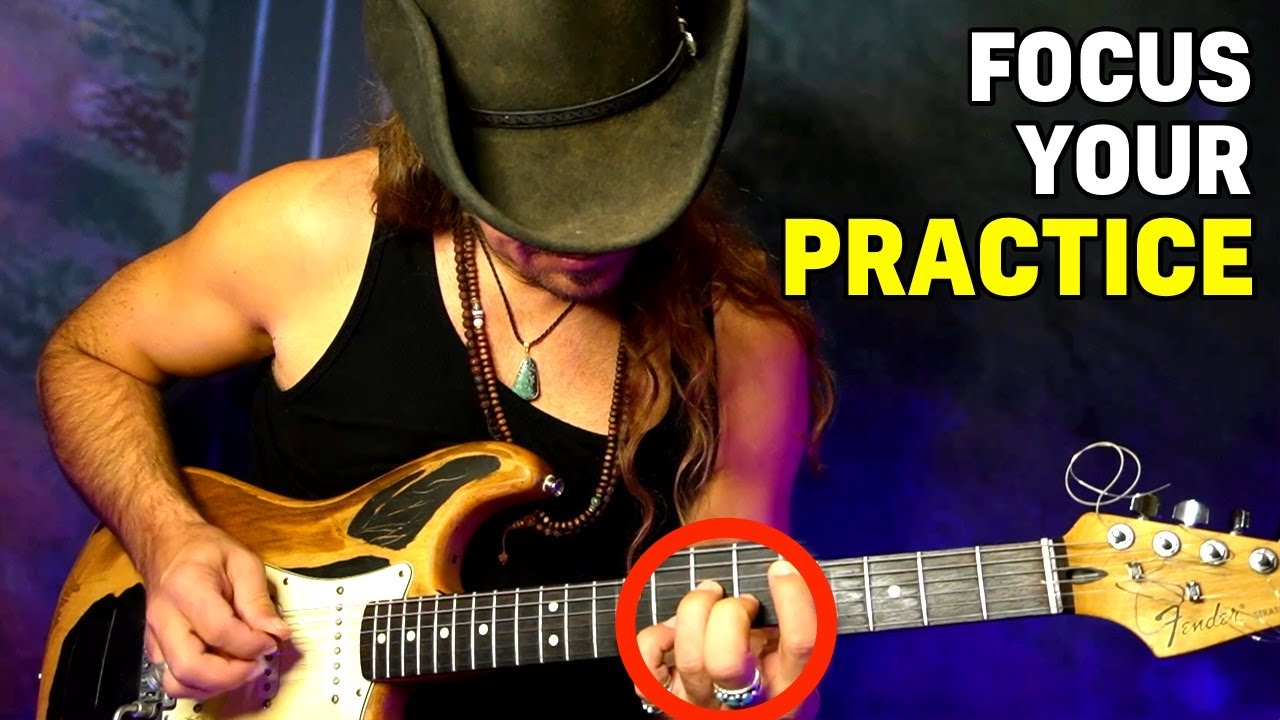
Win Back WASTED YEARS Of Practice With This Unique Approach
Win Back Wasted Years of Practice With This Unique Approach
Have you ever felt like your years of guitar practice haven’t added up to the progress you dreamed of? Many guitarists, especially adult learners, find themselves stuck in repetitive cycles, wondering why their playing doesn’t sound musical despite knowing scales and techniques. The good news? It’s not too late to turn things around. In this post, we’ll break down exactly how to transform your playing and rediscover the joy of making music.
Stop Thinking in Scales—Start Thinking in Phrases
One of the biggest mistakes holding guitarists back is focusing solely on scales. While knowing scales is important, they’re just a toolbox—music comes from how you use those tools. In the video above, you heard two solos. The first solo sounded mechanical because the focus was purely on playing the “right” notes. The timing and technique were fine, but it lacked the emotional connection that makes music come alive.
The second solo, however, was built around phrasing. Phrasing involves thinking about rhythmical motifs, shaping your notes, and building a musical story. To practice this, try the following exercise:
- Choose a simple rhythm pattern (e.g., ta-da, ta-da-da).
- Play that rhythm on a single string, then experiment with changing the notes while maintaining the rhythm.
- Move the rhythm to different starting points in the measure to create variation.
By focusing on phrasing, you'll move from robotic playing to creating solos that truly engage your listeners.
Master the Foundations of Technique
Phrasing won’t shine if your foundational techniques—like bending, sliding, and vibrato—aren’t solid. For example, imagine bending a note but landing slightly out of tune. Even a musically interesting phrase will fall flat if the technique isn’t precise.
Here’s a quick exercise to improve your bending:
- Use a drone note (e.g., C) to play against.
- Play the target note (e.g., C) on your guitar, then bend up to that pitch from a lower note.
- Listen carefully—are you hitting the pitch perfectly? Adjust until you do.
Repeat this exercise until your bends are accurate and consistent. Additionally, practice sliding into and out of notes to add fluidity to your playing. These small details make a huge difference in your phrasing and overall sound.
Expand Your Phrasing Vocabulary
If you’re not sure where to start with phrasing, learning a few licks is a great way to build your vocabulary. Here are three simple licks to get you started:
Example Lick 1: Slow, bluesy bend followed by descending pentatonic notes.
Example Lick 2: Quick hammer-ons and pull-offs with rhythmic variation.
Example Lick 3: Sliding into a chord tone and ending with a wide vibrato.
Don’t stop at memorizing these licks—experiment with them. Can you change the rhythm? Start the lick on a different beat? Use them in your own solos and adapt them to your style. The goal is to internalize these ideas so they become part of your natural playing.
As you practice, remember that it’s not about how many licks you know. It’s about how creatively you can use them to express yourself musically.
Ready to finally break through your plateau? Apply for a free strategy session and let's map out your path to guitar freedom.